Sarcopenia Risk Calculator
Free sarcopenia risk calculator: enter age, sex, height and weight, complete the SARC-F screening, and add optional grip strength, walk speed and calf measurements.
Enter your details — results appear below after you calculate.
Basic inputs
Functional assessment (SARC-F)
Rate each item based on how you have felt over the past year. Each answer scores 0–2 points (max 10). A score ≥4 is SARC-F positive.
Optional measurements
Leave blank if not measured—these improve accuracy when available.
Normal gait speed is ≥0.8 m/s (4 m in under 5 seconds).
“For me” saves to My Metrics when you’re signed in. “For other” only shows results.
How this Sarcopenia Risk Calculator works
Enter your age, sex, height (cm or ft/in), and weight (kg or lb). Then complete the validated SARC-F questionnaire (5 items, 0–2 points each): difficulty lifting 4.5 kg (10 lb), walking across a room, getting up from a chair or bed, climbing stairs, and falls in the past 12 months.
Optionally add calf circumference (cm), handgrip strength (kg), and 4-metre walk time (seconds). We calculate your SARC-F score (≥4 = positive), evaluate optional measurements against EWGSOP2 cutoffs, and assign an overall risk level (Low, Moderate, High, Very High) with a personalised protein target, exercise, and testing guidance.
Sarcopenia is partly preventable—resistance training and ≥1.2 g/kg protein can preserve muscle even after 70. Scroll below for EWGSOP2 criteria, training protocols, adequate protein sources, and 12 FAQs. For related tools, try our Protein Target Calculator, Lean Body Mass Calculator, and One Rep Max Calculator.
Sarcopenia Risk Calculator – SARC-F Screening & Muscle Loss Assessment
Millions search "sarcopenia symptoms", "muscle loss with age", and "how to prevent sarcopenia" each year. Sarcopenia—the progressive loss of muscle mass, strength, and function—affects 10–40% of adults over 65 and raises fall, fracture, and frailty risk. Our free Sarcopenia Risk Calculator uses the validated SARC-F questionnaire plus activity, protein, and health factors to estimate your risk and provide exercise, nutrition, and testing guidance.
Pair results with our Protein Target Calculator, Lean Body Mass Calculator, and One Rep Max Calculator for a complete muscle-health picture.
What Is Sarcopenia?
Sarcopenia (from Greek sarx = flesh, penia = loss) is the age-related decline in skeletal muscle mass, strength, and physical performance. Unlike normal ageing, sarcopenia is a clinical syndrome with defined diagnostic criteria (EWGSOP2) and measurable consequences: falls, fractures, disability, hospitalisation, and increased mortality.
Muscle mass declines ~3–8% per decade after age 30, accelerating after 60. Without resistance training and adequate protein, this loss impairs the ability to rise from a chair, climb stairs, carry groceries, and maintain balance—exactly what the SARC-F questionnaire measures.
The SARC-F Questionnaire
| Letter | Domain | Question | Scoring |
|---|---|---|---|
| S | Strength | Difficulty lifting or carrying about 4.5 kg (10 lb)? | 0 / 1 / 2 |
| A | Assistance | Difficulty walking across a room? | 0 / 1 / 2 |
| R | Rise | Difficulty getting up from a chair or bed? | 0 / 1 / 2 |
| C | Climb | Difficulty climbing a flight of stairs? | 0 / 1 / 2 |
| F | Falls | Falls in the past 12 months | 0 / 1 / 2 |
Interpretation: Score 0–3 = low screening risk. Score ≥4 = SARC-F positive—further assessment with grip strength, gait speed, and body composition recommended.
1What You Enter
Basic inputs
- Age — years
- Gender — male or female
- Height — cm or ft/in
- Weight — kg or lb
Optional measurements
- Calf circumference (cm)
- Handgrip strength (kg)
- 4-metre walk time (seconds)
2How Results Are Interpreted
| Risk level | Criteria |
|---|---|
| Low | SARC-F ≤2, few modifier factors |
| Moderate | SARC-F = 3 or composite score 5–8 |
| High | SARC-F ≥4 or composite score 9–12 |
| Very High | SARC-F ≥6, SARC-F ≥4 with age ≥70 or weight loss, or composite ≥13 |
3EWGSOP2 Diagnostic Criteria
The European Working Group on Sarcopenia in Older People (EWGSOP2) defines sarcopenia in stages:
- Probable sarcopenia: Low muscle strength (grip <27 kg men / <16 kg women)
- Confirmed sarcopenia: Low strength plus low muscle quantity (appendicular lean mass below sex-specific DXA/BIA cutoffs)
- Severe sarcopenia: Low strength, low mass, and poor physical performance (gait speed <0.8 m/s)
4Resistance Training Protocol
Beginner
- Chair squats — 2 sets × 10 reps
- Wall push-ups — 2 sets × 10 reps
- Heel raises — 2 sets × 15 reps
- Resistance band rows — 2 sets × 12 reps
Intermediate
- Goblet squats — 3 sets × 10 reps
- Step-ups — 3 sets × 8 each leg
- Dumbbell rows — 3 sets × 10 reps
- Plank hold — 3 × 20–30 seconds
Advanced
- Barbell squats — 3 sets × 8 reps
- Deadlifts — 3 sets × 6 reps
- Overhead press — 3 sets × 8 reps
- Farmer carries — 3 × 30 metres
5Protein Guidelines for Muscle Preservation
| Population | Daily protein | Per meal |
|---|---|---|
| Adults 18–64 | 0.8–1.0 g/kg | 20–25 g |
| Adults 65+ | 1.0–1.2 g/kg | 25–30 g |
| 65+ with resistance training | 1.2–1.5 g/kg | 30–35 g |
6Indian Diet Protein Sources
Vegetarian
- Moong/chana dal — 7 g protein per cup
- Paneer — 18 g per 100 g
- Greek yogurt — 10 g per cup
- Soy chunks/tofu — 15 g per 100 g
- Peanuts and almonds — 7 g per 30 g
Non-veg
- Eggs — 6 g per egg
- Chicken breast — 31 g per 100 g
- Fish (rohu/salmon) — 20–25 g per 100 g
- Lean mutton — 25 g per 100 g
Sample day (65+)
- Breakfast: 2 eggs + paratha — ~20 g
- Lunch: dal + paneer sabzi — ~25 g
- Snack: Greek yogurt + nuts — ~15 g
- Dinner: fish/chicken + roti — ~30 g
7Clinical Tests for Sarcopenia
- Grip strength — hand dynamometer; <27 kg men / <16 kg women indicates low strength
- Gait speed — 4-metre walk test; <0.8 m/s suggests functional impairment
- Chair stand test — time to rise 5 times without using arms
- DXA or BIA — measures appendicular lean mass index (ALMI)
- Blood tests — vitamin D, CBC, thyroid, CRP, albumin
8Sarcopenia in the Indian Population
Sarcopenia prevalence in India is estimated at 10–33% among community-dwelling older adults, with higher rates in urban sedentary populations. Contributing factors include:
- Vegetarian diets often providing <0.8 g/kg protein—below geriatric recommendations
- Low participation in structured resistance exercise after 60
- High diabetes prevalence accelerating muscle catabolism
- Vitamin D deficiency affecting muscle function
- Joint pain and osteoarthritis limiting physical activity
- Multigenerational households reducing perceived need for fitness
9When to See a Doctor
- SARC-F score ≥4 on this calculator
- Unintentional weight loss >5% in 6 months
- ≥2 falls in the past year
- Sudden difficulty with stairs, rising from chairs, or carrying groceries
- Noticeable decline in grip strength or walking speed
- Diabetes, heart failure, or kidney disease with worsening mobility
Frequently Asked Questions (FAQs)
Related Calculators
You might also be interested in these related health and wellness calculators:
Biological Age Calculator
Estimate your biological age based on lifestyle, health, and fitness factors to understand how well your body is aging compared to your actual age.
Osteoporosis Risk Calculator
Screen osteoporosis with validated OST, SCORE (women) and MORES (men) tools plus clinical risk factors. Get DXA guidance, calcium & vitamin D tips, exercise advice and PDF export.
Fall Risk Assessment Calculator
Screen fall risk with CDC STEADI questions, Morse-inspired mobility scoring and Timed Up and Go self-report. Get balance exercises, home safety tips, medication review guidance and PDF export.
Frailty Index Calculator
Calculate your Rockwood Frailty Index with a 40-item cumulative deficit checklist. Get FI score, frailty category, domain breakdown, exercise and nutrition guidance, and PDF export.
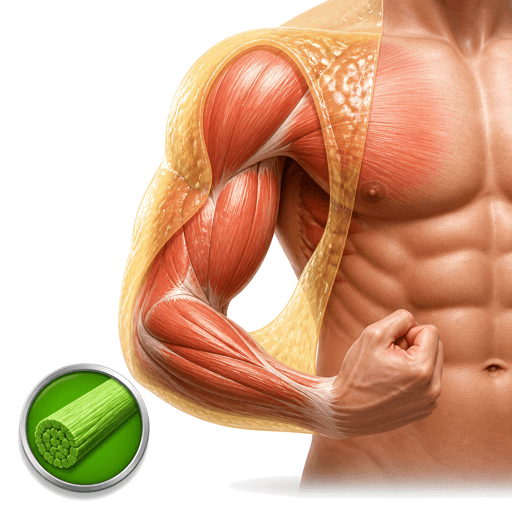
Lean Body Mass (LBM) Calculator
Estimate lean body mass (fat-free mass) from weight, height, and optional body fat %. Boer, James, and Hume formulas, fat mass, LBM %, protein target (1.6–2.2 g/kg), and PDF export.
Protein Target Calculator
Calculate daily protein targets in grams from body weight, goal, and training—with GLP-1 muscle-preservation (1.6–2.2 g/kg), adjusted weight above 100 kg, sedentary 0.8–1.2 g/kg, and per-meal splits.

One Rep Max (1RM) Strength Calculator
Estimate your one-rep max from weight and reps for bench press, squat, deadlift, and overhead press—with Epley, Brzycki & Lombardi formulas, training percentages, and strength standards.
Push-Up Test Calculator
Score your push-up fitness by age and sex—with YMCA/ACSM norms, fitness rating, percentile, 4-week improvement plan, form checklist, and PDF export.
Calculator Categories
Explore more free tools by health topic. Your calculator's category is highlighted below.
Body Composition
16 calculators
Browse categoryNutrition & Metabolism
31 calculators
Browse categoryFitness & Cardio
13 calculators
Browse categorySleep & Circadian Health
6 calculators
Browse categoryAging & Longevity
6 calculators
Browse categoryHeart & Metabolic Health
23 calculators
Browse categoryMental Wellbeing
4 calculators
Browse categoryWomen's Health
10 calculators
Browse categoryEnvironment & Lifestyle
6 calculators
Browse category