Body Mass Index (BMI) Calculator
Calculate your Body Mass Index (BMI) — weight relative to height. Get WHO category, healthy weight range, BMI Prime, ponderal index, health considerations, personalized tips, and PDF export in metric or imperial units.
Enter your details — results appear below after you calculate.
Body measurements
Adults 18 years and older — WHO adult BMI categories
“For me” saves to My Metrics when you’re signed in. “For other” only shows results.
How this Body Mass Index (BMI) calculator works
Enter your age (18 years and older), height and weight in metric (cm, kg) or imperial (feet/inches, lb). Optionally add sex for contextual screening notes (e.g., older-adult guidance at 65+). We compute Body Mass Index, BMI Prime (BMI ÷ 25), and ponderal index, then map you to WHO adult categories with a healthy weight range and mid-range target for your height.
Your report includes a BMI scale indicator, screening insights (category, weight band, waist/body-composition reminder, limitations), health considerations for your category, contributing factors, WHO reference table, and personalized wellness or weight-management tips. Export a PDF or share results for doctor or dietitian visits.
BMI does not measure fat directly—muscular, pregnant, or older adults may need waist circumference or body composition tools. For South Asian adults, WHO notes that cardiometabolic risk can rise at lower BMI than Western cutoffs—pair BMI with waist measures when screening adults or women over 40.
For follow-up, try our Waist-to-Height Ratio (WHtR), Body Fat, Visceral Fat Risk, or Calorie calculators.
Body Mass Index (BMI) Calculator – Categories & Healthy Weight Range
Body Mass Index (BMI) is one of the most searched health metrics on the internet—and for good reason. BMI is weight divided by height squared (kg/m²); it is fast, free, and helps millions of adults screen whether their weight is broadly appropriate for their height. Our Body Mass Index (BMI) Calculator computes your index in metric or imperial units, maps you to WHO adult categories, shows a healthy weight range for your height, includes BMI Prime, and explains limitations (muscle mass, age, ethnicity) so you can use BMI wisely—not as a verdict on your health.
What Is Body Mass Index?
BMI was developed in the 19th century as a population tool and later adopted by the World Health Organization to classify adult underweight, normal weight, overweight, and obesity. Because it uses only height and weight, it is inexpensive and repeatable—but it cannot tell muscle from fat or where fat is stored. That is why waist measures, body composition, blood pressure, and glucose still matter for a full picture.
1What You Enter
Required measurements
- Unit system: metric (cm, kg) or imperial (ft/in, lb)
- Age in years (18 and older — adult WHO categories)
- Height (standing, without shoes)
- Current body weight (light clothing, consistent timing)
Optional context
- Gender (male / female / prefer not to say)
2Formulas We Use
Metric BMI
BMI = weight (kg) ÷ [height (m)]²
Imperial BMI
BMI = 703 × weight (lb) ÷ [height (in)]²
BMI Prime
BMI Prime = BMI ÷ 25
25 is the upper bound of the normal BMI range in WHO adult classification.
Healthy weight range
Minimum weight = 18.5 × height(m)² · Maximum weight = 24.9 × height(m)². We also show a midpoint near BMI 21.7 as a screening reference—not a required target for everyone.
Ponderal index
PI = weight (kg) ÷ [height (m)]³
Shown alongside BMI for educational comparison; adult values often fall roughly 11–15 kg/m³.
3What Your Results Include
- BMI value, WHO category, and BMI Prime
- Healthy weight band and mid-range weight for your height
- Ponderal index and BMI scale position (approx. 15–40)
- Screening insights and health considerations by category
- Weight-change guidance vs healthy BMI band
- Personalized wellness or weight-management tips
- PDF export and share for clinical visits
Health Risks Associated with BMI Categories (Overview)
The table summarizes common population-level associations—individual risk depends on genetics, lifestyle, waist fat, fitness, and medical history.
| Category | BMI range | Common associations |
|---|---|---|
| Underweight | < 18.5 | Malnutrition risk, osteoporosis, anemia, fertility effects if severe |
| Normal | 18.5 – 24.9 | Lowest average risk for weight-related conditions; still check waist and labs |
| Overweight | 25 – 29.9 | Elevated BP, prediabetes, fatty liver in many groups |
| Obesity I–III | ≥ 30 | Higher rates of type 2 diabetes, sleep apnea, joint disease, cardiovascular disease |
Asian & Pacific Population Notes (Educational)
WHO cutoffs are global defaults. Some authorities—including WHO expert consultations for Asian populations—suggest overweight from BMI ≥ 23 and obesity from BMI ≥ 27.5 because cardiometabolic risk may increase at lower BMI. Our calculator displays standard WHO bands; discuss population-specific guidance with your clinician.
| Guideline style | Overweight | Obesity |
|---|---|---|
| WHO (general adults) | ≥ 25 | ≥ 30 |
| Some Asian recommendations | ≥ 23 | ≥ 27.5 |
Sample BMI Calculations
Example A (metric)
Height 170 cm (1.70 m), weight 72 kg → BMI = 72 ÷ 1.70² = 24.9 (upper normal). Healthy band ≈ 53.5–72 kg.
Example B (imperial)
5 ft 10 in (70 in), 180 lb → BMI = 703 × 180 ÷ 70² ≈ 25.8 (overweight). Healthy band roughly 129–173 lb for that height.
Benefits of Using This Body Mass Index (BMI) Calculator
- Instant screening – Know your WHO category in seconds.
- Actionable ranges – See healthy and mid-range weights for your height.
- Extra metrics – BMI Prime and ponderal index for context.
- Category education – Health considerations tied to your result.
- Track progress – Recalculate after lifestyle changes.
- Holistic follow-up – Link to Body Fat, Calorie, Visceral Fat, and Cardiovascular tools on this site.
How to Use This Body Mass Index (BMI) Calculator
- Choose units – Metric or imperial to match your scale.
- Measure accurately – Height without shoes; weight at a consistent time of day.
- Enter your age – Required; adults 18+ only. Adds older-adult notes when age is 65+.
- Calculate – Review BMI, category, ranges, insights, and health considerations.
- Export or share – Save PDF for appointments.
- Follow up – Pair with waist measurement or our other calculators; see a clinician if BMI is very high or low unintentionally.
Weight Management Strategies (Overview)
If BMI is below normal
- Increase calories with nutrient-dense foods
- Resistance training to build lean mass
- Rule out medical causes of unintended weight loss
- Dietitian support for safe gain plans
If BMI is above normal
- Target 5–10% loss first when clinically appropriate
- More steps, strength training, and sleep hygiene
- Whole foods, fiber, protein; limit sugary drinks
- Medical programs or therapy when BMI ≥ 30 or comorbidities
Understanding Your BMI Category
Underweight
BMI < 18.5. Focus on adequate nutrition and medical evaluation if unintended.
Normal
BMI 18.5–24.9. Maintain habits; still monitor waist and fitness.
Overweight
BMI 25–29.9. Lifestyle changes often improve metabolic markers.
Obesity Class I
BMI 30–34.9. Higher cardiometabolic risk—clinical follow-up common.
Obesity Class II
BMI 35–39.9. Comprehensive weight-management plans often discussed.
Obesity Class III
BMI ≥ 40. Highest screening concern—work with a healthcare team.
When BMI May Mislead
- Athletes & bodybuilders – High muscle mass raises BMI without raising fat-related risk.
- Older adults – Muscle loss can mask fat gain at normal BMI.
- Pregnancy – Use obstetric weight-gain charts, not adult categories.
- Edema or ascites – Fluid increases weight independent of fat.
- Amputation or limb difference – Adjusted formulas may be needed clinically.
Common BMI Mistakes
1. Using incorrect height units
Entering centimeters as if they were meters—or mixing feet with centimeters—can wildly skew BMI. Double-check your unit toggle.
2. Weighing at unrepresentative times
Morning vs evening weight can differ by several pounds from food and fluid. Use a consistent time of day for trend tracking.
3. Assuming normal BMI means metabolically healthy
Normal-weight individuals can still have elevated waist fat, blood pressure, or insulin resistance—especially with sedentary habits.
4. Chasing an arbitrary “ideal” number
The healthy BMI band is a range. Mid-range weight is a reference, not a mandate—sustainable habits matter more than a single digit.
5. Using adult BMI for children
Under 18, percentiles on growth charts replace adult cutoffs—this calculator requires age 18+ and is not for children or teens.
The Science Behind BMI
Belgian statistician Adolphe Quetelet developed an early height–weight index in the 1830s. Physiologist Ancel Keys popularized “Body Mass Index” in the 1970s for epidemiology. Today WHO, CDC, and NHS use BMI for population surveillance because it is simple and correlates with body fat on average—though it fails for many individuals. Modern prevention emphasizes waist circumference, body composition, and cardiometabolic labs alongside BMI.
Related Tools on This Site
BMI pairs well with our Body Fat Calculator, Calorie Calculator, Visceral Fat Risk, and Macronutrient & Calorie calculators for a fuller weight-management picture.
Frequently Asked Questions (FAQs)
Related Calculators
You might also be interested in these related health and wellness calculators:
Calorie Calculator
Estimate your daily calorie needs based on your age, gender, weight, height, and activity level to support weight loss, maintenance, or muscle gain goals.
GERD (Gastroesophageal Reflux Disease) Risk Calculator
Assess GERD (Gastroesophageal Reflux Disease) risk from age, gender, BMI, heartburn, regurgitation, smoking, alcohol, late-night eating, spicy food & family history.

Type 2 Diabetes Risk Assessment Calculator
Assess type 2 diabetes risk using the Indian Diabetes Risk Score (IDRS). Enter age, waist, family history, activity, and clinical history. Low to Very High risk with PDF export.
Child BMI Calculator
Calculate BMI-for-age percentile for children and teens (ages 2–19) using CDC growth charts. Get weight-status category, healthy range, and PDF export.

Ideal Body Weight Calculator
Calculate ideal weight for your height using Devine, Robinson, Miller, and Hamwi formulas. See average, ideal weight range, frame-size adjustment, and current-weight comparison.
Waist-to-Height Ratio (WHtR) Calculator
Calculate waist-to-height ratio (WHtR) from waist and height. Half-height rule, target waist at 0.5, central fat risk bands—often a stronger screen than BMI alone.
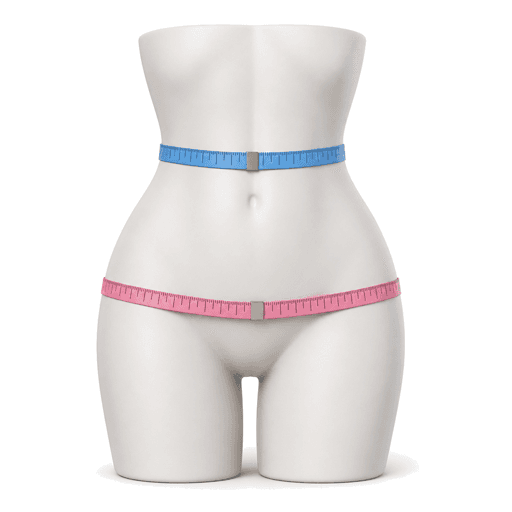
Waist-to-Hip Ratio (WHR) Health Risk Calculator
Calculate waist-to-hip ratio (WHR) from waist and hip measurements. Apple vs pear body shape, WHO health risk levels, and cardiovascular risk interpretation.
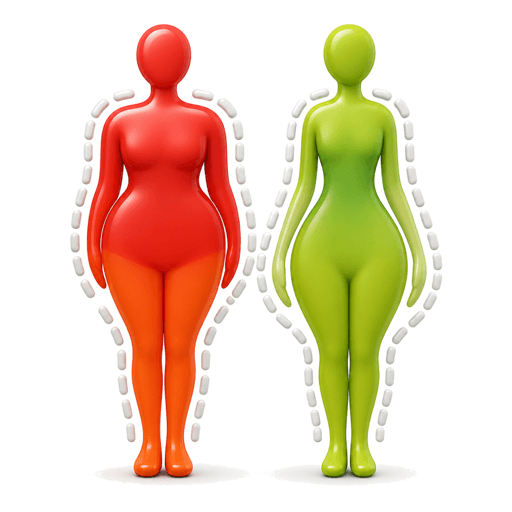
Body Shape Calculator (Apple, Pear, Hourglass, Rectangle)
Find your body shape from shoulder, bust, waist, and hip measurements. Hourglass, pear, apple, or rectangle—with ratios, health implications, fitness tips, and PDF export.
Calculator Categories
Explore more free tools by health topic. Your calculator's category is highlighted below.
Body Composition
16 calculators
Browse categoryNutrition & Metabolism
31 calculators
Browse categoryFitness & Cardio
13 calculators
Browse categorySleep & Circadian Health
6 calculators
Browse categoryAging & Longevity
6 calculators
Browse categoryHeart & Metabolic Health
23 calculators
Browse categoryMental Wellbeing
4 calculators
Browse categoryWomen's Health
10 calculators
Browse categoryEnvironment & Lifestyle
6 calculators
Browse category