Protein Target Calculator
Estimate your daily protein target in grams and per meal—tailored for general health, fat loss, muscle gain, and GLP-1 weight loss to help preserve lean muscle. Get activity and resistance-training adjustments, meal distribution guidance, and PDF export.
Enter your details — results appear below after you calculate.
Body weight
Age 65+ adjusts minimum protein for sarcopenia risk
Goals, GLP-1 & training
“For me” saves to My Metrics when you’re signed in. “For other” only shows results.
How this Protein Target Calculator works
Enter body weight (kg or lb), optional age, goal (general health, fat loss, muscle gain, or GLP-1 weight loss), whether you are on GLP-1 medication, activity level, and resistance-training frequency. We apply goal-based g/kg ranges (about 0.8–1.2 g/kg for sedentary general health up to 1.6–2.2 g/kg for fat loss or GLP-1), convert to daily grams, and split targets across 3 or 4 meals.
On GLP-1 therapy, appetite often drops faster than protein needs—targets use 1.6–2.2 g/kg for muscle preservation. Above 100 kg body weight, an adjusted weight is used for gram calculations so protein is not overestimated. Results include interpretation, GLP-1 notes, reference tables, and personalized recommendations. Export a PDF or share for dietitian or clinician visits.
For full calories and macros, try our Macronutrient & Calorie, Calorie, or Body Fat calculators.
Protein Target Calculator – Daily Grams, GLP-1 & Muscle Preservation
Protein is the most discussed macronutrient in modern weight management—and for good reason. During calorie deficits, aging, and especially GLP-1–mediated weight loss, inadequate protein plus lack of resistance training often means losing muscle along with fat. Our Protein Target Calculator turns your body weight, goal, activity, and training into a daily gram range, g/kg reference, per-meal distribution, screening insights, and lifestyle guidance—with PDF export so you can bring clear numbers to your dietitian or clinician.
What Is a Daily Protein Target?
Protein supplies amino acids for muscle repair, immune function, enzymes, and hormones. The minimum RDA (~0.8 g/kg) prevents deficiency in sedentary adults but is low for people who exercise, lose weight, or take GLP-1 medications. Sports-nutrition and clinical commentary often recommend roughly 0.8–2.2 g/kg depending on activity and goal—higher in deficit or on GLP-1 therapy to protect lean mass. For GLP-1 users above 100 kg, gram targets use an adjusted body weight to avoid overestimating protein. Results show practical grams per day and grams per meal.
1What You Enter
Required inputs
- Unit system: metric (kg) or imperial (lb)
- Body weight
- Primary goal (health, fat loss, muscle gain, GLP-1)
- Activity level and resistance-training frequency
Optional context
- Age (65+ raises minimum protein context)
- GLP-1 medication checkbox (semaglutide, tirzepatide, etc.)
- Meals per day (3 or 4) for distribution
2Formulas We Use
Daily protein (grams)
Daily protein (g) = effective weight (kg) × g/kg target
Example: 80 kg, fat-loss range 1.6–2.2 g/kg → 128–176 g/day; midpoint ≈ 152 g. GLP-1 above 100 kg: effective = 100 + (weight − 100) × 0.25 (e.g. 140 kg → 110 kg effective).
Per-meal split
Per meal (g) = daily range ÷ number of meals
Many experts aim for ≥25 g protein at main meals to support muscle protein synthesis, especially during weight loss or after age 65.
Goal-based g/kg bands
- General health (sedentary / light): 0.8–1.2 g/kg
- General health (moderate+ activity): 1.2–1.6 g/kg
- Fat loss / muscle gain: 1.6–2.2 g/kg
- GLP-1 / on GLP-1 meds: 1.6–2.2 g/kg (max cap 2.2)
- Adjustments: +training, +activity, age 65+ floor; GLP-1 adjusted weight if >100 kg
Imperial reference (g per lb)
We also show g/lb (g/kg × 0.454) for users who think in pounds of body weight.
3What Your Results Include
- Daily protein target (grams) and min–max range
- g/kg and g/lb reference values
- Priority level (standard, elevated, high for GLP-1)
- Protein intensity scale (visual bar)
- Per-meal distribution (3 or 4 meals)
- GLP-1 muscle-preservation note and adjusted-weight explanation when applicable
- Screening insights, interpretation, and health considerations
- Contributing factors and personalized recommendations
- g/kg reference table and PDF export / share
Protein Target Bands by Goal
| Goal | g/kg/day | Priority |
|---|---|---|
| General health (sedentary / light) | 0.8–1.2 | Standard |
| General health (moderate+ activity) | 1.2–1.6 | Standard |
| Fat loss | 1.6–2.2 | Elevated |
| Muscle gain | 1.6–2.2 | Elevated |
| GLP-1 weight loss | 1.6–2.2 | High |
| Adults 65+ | ≥1.2 minimum | Often elevated per meal |
GLP-1 Therapy & Lean Mass (Overview)
Semaglutide (Ozempic, Wegovy), tirzepatide (Mounjaro, Zepbound), and related agents reduce appetite and often total calories. Without adequate protein and resistance training, weight lost can include disproportionate muscle. Clinical and dietetic practice increasingly emphasizes protein tracking, strength exercise, and sometimes body-composition monitoring—not scale weight alone.
| Risk | Why it happens | Mitigation |
|---|---|---|
| Muscle loss | Low calories + low protein + no lifting | 1.6–2.2 g/kg, 25+ g/meal, resistance 2–3×/week; adjusted weight if >100 kg |
| Under-eating protein | Reduced appetite masks needs | Track grams; protein-dense snacks & shakes |
| Fatigue | Rapid loss, micronutrient gaps | Balanced meals; clinician follow-up |
Protein Target vs Macronutrient Calculator
| Tool | Best for | Output |
|---|---|---|
| Protein Target (this page) | GLP-1, muscle retention, protein-only focus | Grams/day, per meal, g/kg bands |
| Macronutrient & Calorie | Full diet planning | Calories + protein, carbs, fats |
Sample Protein Calculations
Example A (fat loss)
70 kg, fat loss, moderate activity → 1.6–2.2 g/kg → 112–154 g/day (midpoint ~133 g). Three meals ≈ 37–51 g each.
Example B (GLP-1, 90 kg)
90 kg on tirzepatide → 1.6–2.2 g/kg → 144–198 g/day(midpoint ~171 g). Track daily; add resistance training.
Example C (GLP-1, 140 kg)
140 kg → adjusted 110 kg effective → 1.6–2.2 g/kg → 176–242 g/day (not 300g+ from full weight). Use protein-dense meals and shakes when appetite is low.
Benefits of Using This Protein Target Calculator
- GLP-1–aware ranges – 1.6–2.2 g/kg with adjusted weight above 100 kg so targets stay realistic.
- Clear gram targets – Converts g/kg into daily and per-meal grams.
- Training-adjusted – Bumps targets when you lift 3+ times per week.
- Older-adult context – Notes higher needs after 65.
- Actionable meals – Split across 3 or 4 eating occasions.
- Holistic follow-up – Link to Macro, Calorie, Body Fat, and WHtR tools on this site.
How to Use This Protein Target Calculator
- Choose units – kg or lb to match your scale.
- Enter weight – Use recent morning weight if tracking loss.
- Select goal – Pick GLP-1 if on semaglutide/tirzepatide or check the GLP-1 box.
- Add activity & lifting – Honest inputs improve the range.
- Calculate – Review grams, per-meal split, insights, and recommendations.
- Export or share – PDF for dietitian or doctor visits.
- Recalculate – After ~5% weight change or goal shift.
Strategies by Priority Level
Standard (general health)
- Hit daily gram target across meals
- Add resistance training 2×/week for muscle health
- Prioritize whole-food protein sources
Elevated / high (deficit, GLP-1, gain)
- Track protein grams daily—do not rely on hunger alone on GLP-1
- 25–40 g protein at main meals when possible
- Resistance train 2–3×/week; discuss plans with your clinician
- Use protein shakes or Greek yogurt when meals are small
Understanding Your Protein Priority
Standard
Sedentary/light: ~0.8–1.2 g/kg. Moderate+ activity: ~1.2–1.6 g/kg. Increase if you enter fat loss or GLP-1 therapy.
Elevated
Fat loss or muscle gain (~1.6–2.2 g/kg). Supports satiety and lean-mass retention in deficit.
High (GLP-1)
Rapid loss with appetite suppression—protein and lifting are priorities, not optional extras.
High-Protein Foods (Approximate per Serving)
| Food | Protein (g) |
|---|---|
| Chicken breast, 100 g cooked | ~31 |
| Greek yogurt, 170 g | ~15–17 |
| 2 large eggs | ~12 |
| Canned tuna, 100 g | ~26 |
| Whey scoop (typical) | ~20–25 |
Common Protein Planning Mistakes
1. Relying on the RDA alone
0.8 g/kg prevents deficiency but is low for active adults, older adults, and anyone losing weight on GLP-1.
2. One large protein meal per day
Spreading protein across meals often supports muscle protein synthesis better than a single 80 g dinner.
3. High protein without resistance training
Amino acids need a training signal. Lift 2–3× weekly during weight loss.
4. Ignoring appetite on GLP-1
Track grams; protein-dense snacks and shakes help when solid meals are small.
The Science Behind Protein Targets
Position stands from sports-nutrition societies and reviews in strength and weight-loss literature commonly cite 1.6–2.2 g/kg for maximizing lean mass in trained individuals, with similar ranges discussed for preserving muscle in energy deficit. Geriatric guidelines emphasize higher per-meal protein for older adults due to anabolic resistance. GLP-1 data continue to evolve; clinical focus on body composition—not just scale weight—drives current protein and resistance-training recommendations in weight-management care.
Related Tools on This Site
Pair protein targets with our Macronutrient & Calorie Calculator, Calorie Calculator, Body Fat Calculator, Waist-to-Height Ratio (WHtR), and Insulin Resistance (HOMA-IR) for metabolic and body-composition context.
Frequently Asked Questions (FAQs)
Related Calculators
You might also be interested in these related health and wellness calculators:
Sarcopenia Risk Calculator
Screen sarcopenia with the validated SARC-F questionnaire plus activity, protein and health factors. Get risk level, resistance training tips, nutrition guidance and clinical testing recommendations.
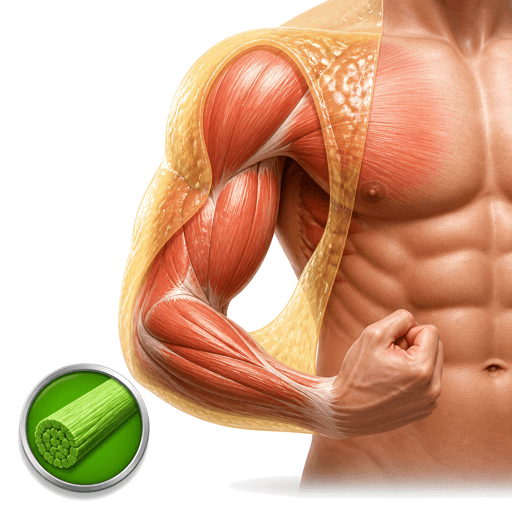
Lean Body Mass (LBM) Calculator
Estimate lean body mass (fat-free mass) from weight, height, and optional body fat %. Boer, James, and Hume formulas, fat mass, LBM %, protein target (1.6–2.2 g/kg), and PDF export.
Creatine Dosage Calculator
Calculate daily creatine monohydrate dose from body weight—3–5 g maintenance or 0.3 g/kg loading phase, split-dose schedule, 5 g scoop equivalents, timing tips, and PDF export.
GLP-1 Protein & Muscle Preservation Calculator
GLP-1–focused protein targets (1.6–2.2 g/kg), muscle preservation risk score, per-meal leucine guidance, and resistance-training tips for semaglutide, tirzepatide, and liraglutide users.
Fiber Intake Calculator
Calculate daily dietary fiber targets in grams from TDEE (BMR × activity)—IOM Adequate Intake, 14 g per 1,000 kcal, sample meal plan, hydration guide, soluble vs insoluble split, and PDF export.
Fat Intake Calculator
Calculate daily dietary fat targets in grams from TDEE at 20–35% of calories—saturated fat limits, omega-3 guidance, per-meal splits, healthy fat food examples (Indian & global) & PDF export.
Muscle Gain / Bulking Macro Calculator
Calculate bulking calories and macro split for lean, moderate, or aggressive muscle gain. TDEE-based surplus, protein g/kg, training vs rest day targets, meal distribution, and PDF export.
Body Recomposition Calculator
Calculate recomp calories and macros to lose fat and build muscle—maintenance or slight deficit, high protein g/kg, training vs rest day targets, projections, and PDF export.
Calculator Categories
Explore more free tools by health topic. Your calculator's category is highlighted below.
Nutrition & Metabolism
31 calculators
Browse categoryBody Composition
16 calculators
Browse categoryFitness & Cardio
13 calculators
Browse categorySleep & Circadian Health
6 calculators
Browse categoryAging & Longevity
6 calculators
Browse categoryHeart & Metabolic Health
23 calculators
Browse categoryMental Wellbeing
4 calculators
Browse categoryWomen's Health
10 calculators
Browse categoryEnvironment & Lifestyle
6 calculators
Browse category