COPD Risk Assessment Calculator
Free COPD (Chronic Obstructive Pulmonary Disease) risk assessment calculator using the validated COPD Population Screener (COPD-PS): screen for chronic obstructive pulmonary disease risk from age, sex, smoking history, breathlessness, cough/phlegm, and activity limitation — with spirometry guidance.
Enter your details — results appear below after you calculate.
Basic information
COPD-PS is validated for adults 35 years and older
COPD-PS symptom screening
Answer each question based on the past 4 weeks (breathlessness) or your typical experience. The COPD Population Screener is a validated 5-item questionnaire used worldwide to identify adults who may need spirometry for COPD (Chronic Obstructive Pulmonary Disease) diagnosis.
Select how much you agree with this statement about the past 12 months
“For me” saves to My Metrics when you’re signed in. “For other” only shows results.
How this COPD (Chronic Obstructive Pulmonary Disease) Risk Assessment Calculator works
Enter your age (35+ years), sex, whether you have smoked at least 100 cigarettes in your lifetime, and answer three symptom questions about breathlessness (past 4 weeks), phlegm / mucus production, and activity limitation from breathing. We apply the validated COPD Population Screener (COPD-PS) scoring algorithm (0–10 points).
Results include your COPD-PS total score, risk level (low, borderline, elevated, or high), spirometry referral guidance (recommended at score ≥ 5 per the original US validation), per-item score breakdown, GOLD guideline context, smoking cessation benefits, treatment overview, and personalized recommendations.
Clinical thresholds: COPD-PS ≥ 5 suggests spirometry referral (84% sensitivity in validation); scores 7–10 are strongly associated with confirmed airflow obstruction. Scores 3–4 are borderline — some international studies use ≥ 4. Only spirometry can diagnose COPD (Chronic Obstructive Pulmonary Disease).
Pair with our Pack-Year Smoking Calculator, Smoking Cost Calculator, and Air Quality Exposure Calculator. Results include PDF export / share. This is an educational screening tool—not a medical diagnosis.
COPD (Chronic Obstructive Pulmonary Disease) Risk Assessment Calculator – COPD-PS Screening & Spirometry Guidance
Millions search "COPD risk calculator", "do I have COPD", "COPD screening test", and "spirometry referral" each year. Chronic obstructive pulmonary disease (COPD) affects an estimated 380 million people worldwide — yet up to half of cases remain undiagnosed. Our free COPD (Chronic Obstructive Pulmonary Disease) Risk Assessment Calculator uses the validated COPD Population Screener (COPD-PS) to estimate your likelihood of undiagnosed airflow obstruction and guide spirometry referral.
Pair results with our Pack-Year Smoking Calculator, Smoking Cost Calculator, Air Quality Exposure Calculator, and Sleep Apnea Risk Calculator for complete respiratory and lifestyle wellness.
Why Screen for COPD (Chronic Obstructive Pulmonary Disease)?
COPD (Chronic Obstructive Pulmonary Disease) — including emphysema and chronic bronchitis — is a leading cause of death worldwide. Symptoms develop gradually: chronic cough, phlegm production, breathlessness, and exercise intolerance. Many patients attribute symptoms to aging or being "out of shape," delaying diagnosis for years. Early detection through screening and spirometry enables treatment that slows progression, reduces exacerbations, and improves quality of life.
The GOLD (Global Initiative for Chronic Obstructive Lung Disease) guidelines define COPD as persistent respiratory symptoms and airflow limitation confirmed by spirometry (post-bronchodilator FEV₁/FVC < 0.70). Screening questionnaires like the COPD-PS identify who should undergo that confirmatory test.
1What Is the COPD Population Screener (COPD-PS)?
The COPD-PS was developed by Martinez et al. (2008) with a clinician working group of pulmonologists and primary care physicians. It is a brief, self-scored 5-item questionnaire designed for the general population — not just patients already seeking respiratory care. Validation in 697 patients showed:
- AUC 0.81–0.88 for detecting fixed airflow obstruction (post-bronchodilator FEV₁/FVC < 70%)
- Mean score 6.8 in confirmed COPD vs 4.0 without airflow obstruction
- Cutoff ≥ 5: 84% sensitivity, 61% specificity for spirometry referral
- Test-retest reliability: Pearson r = 0.91
2COPD-PS Scoring — How Points Are Assigned
| Item | Response options | Points |
|---|---|---|
| Age | < 50 / 50–59 / 60–69 / 70+ | 0 / 1 / 2 / 2 |
| Lifetime smoking (≥ 100 cigarettes) | No / Yes | 0 / 2 |
| Shortness of breath (past 4 weeks) | None / A little–Some / Most–All of the time | 0 / 1 / 2 |
| Phlegm / mucus production | Never–With colds / Few days per month or week / Most days | 0 / 1 / 2 |
| Activity limitation from breathing | Disagree / Neutral–Agree / Strongly agree | 0 / 1 / 2 |
Total score: 0–10. Scores ≥ 5 meet the standard US spirometry referral threshold. Scores 3–4 are borderline; some international validations use ≥ 4. Scores 7–10 are strongly associated with confirmed airflow obstruction.
3Understanding Your Results
- Low (0–2): Below screening thresholds. Continue healthy habits; seek evaluation if new respiratory symptoms develop.
- Borderline (3–4): Below standard ≥ 5 cutoff but above minimal risk. Monitor symptoms; discuss spirometry if cough, phlegm, or breathlessness persist — especially with smoking history.
- Elevated (5–6): Meets COPD-PS spirometry referral threshold. Book lung function testing with your GP or pulmonologist.
- High (7–10): Strongly associated with airflow obstruction in validation studies. Spirometry strongly recommended; prompt evaluation if symptoms are significant.
4Spirometry — The Gold-Standard Diagnostic Test
Spirometry measures forced expiratory volume in one second (FEV₁) and forced vital capacity (FVC). A post-bronchodilator FEV₁/FVC ratio below 0.70 confirms persistent airflow limitation — the hallmark of COPD. The test is:
- Non-invasive and painless — you breathe into a mouthpiece
- Completed in approximately 15 minutes
- Available at GP offices, hospitals, and pulmonary clinics
- Distinguishes COPD from asthma, heart failure, and deconditioning
The National Lung Health Education Program (NHLBI) advocates office spirometry for any patient with cough, phlegm, wheeze, or breathlessness and significant risk-factor exposure.
5COPD Risk Factors Beyond Smoking
- Tobacco smoke — cigarettes, bidis, cigars (leading cause; ≥ 100 cigarettes lifetime scored in COPD-PS)
- Occupational exposure — dust, fumes, chemicals (mining, construction, farming)
- Indoor air pollution — biomass fuel smoke from cooking/heating
- Alpha-1 antitrypsin deficiency — genetic cause of early-onset emphysema
- Childhood respiratory infections — impair lung development
- Age — prevalence rises after 40; COPD-PS scores higher ages more heavily
6Example: COPD-PS Score Calculation
A 62-year-old former smoker reports breathlessness "some of the time," phlegm "a few days a week," and agrees that breathing limits activities:
- Age 62 → 2 points (60–69 band)
- Lifetime smoker → 2 points
- Some breathlessness → 1 point
- Phlegm few days/week → 1 point
- Agree activity limitation → 1 point
- Total: 7/10 — High risk; spirometry strongly recommended
COPD (Chronic Obstructive Pulmonary Disease) Treatment Overview (If Diagnosed)
- Smoking cessation — most impactful intervention
- Bronchodilators (LAMA, LABA) — first-line per GOLD 2024
- Inhaled corticosteroids — for frequent exacerbations
- Pulmonary rehabilitation — exercise training and education
- Vaccinations — annual influenza and pneumococcal
- Oxygen therapy — for chronic resting hypoxemia
GOLD COPD Severity Stages (After Spirometry)
Once COPD is confirmed by spirometry, the GOLD 2024 report classifies airflow limitation by post-bronchodilator FEV₁ (% of predicted normal). This calculator screens for who needs testing — it does not assign GOLD stage.
| GOLD stage | Severity | Post-BD FEV₁ (% predicted) |
|---|---|---|
| GOLD 1 | Mild | ≥ 80% |
| GOLD 2 | Moderate | 50–79% |
| GOLD 3 | Severe | 30–49% |
| GOLD 4 | Very severe | < 30% |
COPD vs. Asthma — Key Differences
Both conditions cause cough and breathlessness, but treatment and prognosis differ. Spirometry with bronchodilator reversibility testing is essential for accurate diagnosis.
| Feature | COPD | Asthma |
|---|---|---|
| Typical onset | After age 40 (smokers) | Often childhood or young adult |
| Airflow limitation | Largely irreversible | Often reversible with bronchodilator |
| Main trigger | Tobacco smoke, occupational dust | Allergens, exercise, infections |
| Progression | Gradually worsens over years | Variable; episodes and remissions |
International COPD-PS Validation Notes
The original US validation (Martinez et al., 2008) used a cutoff of ≥ 5 for spirometry referral. Subsequent studies in Colombia, Japan, China, and other populations have found that a cutoff of ≥ 4 improves sensitivity with acceptable specificity — particularly useful in high-prevalence or resource-limited settings.
- US (original): Cutoff ≥ 5 — 84% sensitivity, 61% specificity
- Colombia (2021): Cutoff ≥ 4 — 77% sensitivity, 46% specificity; excellent test-retest reliability
- China (PEC study): Recommended reducing cutoff to 4 before use in physical examination centers
Our calculator flags spirometry at ≥ 5 (standard US threshold) and notes borderline scores (3–4) for clinical discussion.
Early Warning Signs of COPD (Chronic Obstructive Pulmonary Disease)
COPD symptoms creep up slowly. Many people dismiss them as aging or poor fitness. Watch for these patterns — especially if you smoke or have occupational exposure:
- Chronic cough — lasting 8+ weeks, often worse in the morning
- Daily phlegm — clear, white, yellow, or green mucus most days
- Shortness of breath — on stairs, walking, or during routine tasks that used to be easy
- Wheezing — whistling sound when breathing out
- Chest tightness — pressure or constriction, especially with exertion
- Frequent respiratory infections — colds that linger weeks; recurrent bronchitis
- Unintended weight loss — in advanced disease, breathing burns extra calories
- Swollen ankles — may signal cor pulmonale (right heart strain from lung disease)
Benefits of Quitting Smoking for Lung Health
Whether or not you have COPD, quitting slows further lung damage. Pair with our Pack-Year Smoking Calculator to quantify your exposure history.
| Time since last cigarette | Lung & health changes |
|---|---|
| 24–48 hours | Carbon monoxide clears; oxygen levels improve |
| 1–9 months | Cough and shortness of breath often decrease; cilia recover |
| 1 year | CHD risk roughly half that of a continuing smoker |
| 5+ years | Stroke risk approaches never-smoker levels |
| 10–15 years | Lung cancer risk drops ~50% vs. continuing smokers; COPD progression slows |
COPD-PS vs. Other COPD Tools
- COPD-PS (this calculator): 5 items, 0–10 score — screens undiagnosed adults in the general population for possible airflow obstruction
- CAT (COPD Assessment Test): 8 items, 0–40 — measures symptom burden in patients already diagnosed with COPD
- mMRC dyspnea scale: 0–4 grades — rates breathlessness severity; used in GOLD combined assessment
- CAPTURE questionnaire: Newer primary-care tool focusing on exacerbation risk; not yet as widely validated as COPD-PS
- Pack-years: Quantifies tobacco exposure — use our Pack-Year Calculator for LDCT screening and exposure classification
Living Well With COPD (Chronic Obstructive Pulmonary Disease) — Self-Management Tips
- Pursed-lip breathing — exhale slowly through pursed lips to reduce breathlessness during activity
- Energy conservation — sit for tasks; organize daily activities to minimize stair climbing
- Stay active — walking and pulmonary rehab improve stamina even with reduced lung function
- Avoid triggers — cold air, smoke, strong perfumes, and high pollution days worsen symptoms; check our Air Quality Calculator
- Know your action plan — recognize early exacerbation signs (more phlegm, color change, increased breathlessness) and start rescue meds promptly
- Nutrition — small frequent meals reduce breathlessness from a full stomach; maintain adequate protein
When to See a Doctor
- COPD-PS score ≥ 5 — schedule spirometry with your GP or pulmonologist
- Score 3–4 with persistent symptoms — discuss screening even if below standard cutoff
- Chronic cough 8+ weeks — evaluate regardless of screener score
- Former or current smoker age 50+ — combine with pack-year assessment for lung cancer screening eligibility
- Sudden symptom worsening — coughing blood, severe breathlessness, chest pain, or cyanosis require urgent care
- Planning to quit — request nicotine replacement, varenicline, bupropion, or counselling support
Frequently Asked Questions (FAQs)
Related Calculators
You might also be interested in these related health and wellness calculators:
Air Quality Exposure Calculator
Estimate your daily air quality exposure based on location, time outdoors, and pollution levels. High exposure may impact respiratory and overall health.

Life Expectancy & Longevity Risk Calculator
Estimate your life expectancy based on your age, gender, lifestyle, medical history, and habits. Receive personalized tips to improve longevity, reduce health risks, and enhance overall well-being.
Sleep Apnea Risk Calculator
Screen obstructive sleep apnea (OSA) risk with the validated STOP-BANG questionnaire. Snoring, daytime sleepiness, BMI, neck size, blood pressure, risk level, and sleep study recommendation.
Framingham Risk Score Calculator
Official Framingham risk score with 2008 General CVD (CHD, stroke, PAD, heart failure) and 1998 Wilson Hard CHD. Framingham Heart Study validated scores with treatment guidance.
Cardiovascular Risk Calculator
Estimate heart disease and stroke screening risk from blood pressure, cholesterol, smoking, diabetes, family history, and activity. Educational score with risk domains—not formal ASCVD.

Smoking Cost & Health Impact Calculator
Calculate daily, monthly & yearly cigarette spend in INR, total money spent, 5 & 10-year projections, cigarettes smoked, life lost estimate (WHO), and what you could have bought instead.

Pack-Year Smoking Calculator
Calculate clinical pack-years from cigarettes per day and years smoked. COPD risk context, USPSTF LDCT lung cancer screening eligibility, cardiovascular guidance, and PDF export.
Lung Age Calculator
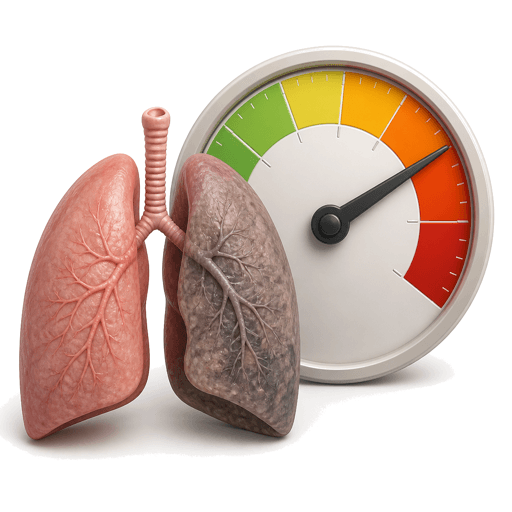
Calculate spirometric lung age from FEV₁, height, age & sex using Morris-Temple (1985). Compare lung age vs chronological age, FEV₁ % predicted, GOLD context, COPD guidance & PDF export.
Calculator Categories
Explore more free tools by health topic. Your calculator's category is highlighted below.
Environment & Lifestyle
6 calculators
Browse categoryNutrition & Metabolism
31 calculators
Browse categoryBody Composition
16 calculators
Browse categoryFitness & Cardio
13 calculators
Browse categorySleep & Circadian Health
6 calculators
Browse categoryAging & Longevity
6 calculators
Browse categoryHeart & Metabolic Health
23 calculators
Browse categoryMental Wellbeing
4 calculators
Browse categoryWomen's Health
10 calculators
Browse category