Framingham Risk Score Calculator
Free Framingham risk score calculator with two validated scores: 2008 General CVD risk (CHD, stroke, PAD, heart failure) and 1998 Hard CHD risk (angina, MI, coronary death) — from cholesterol, BP, smoking, diabetes, age, and sex, with risk categories and PDF export.
Enter your details — results appear below after you calculate.
Demographics
Framingham validated for ages 30–74 without prior cardiovascular disease
Framingham uses mg/dL internally — mmol/L values convert automatically (mg/dL = mmol/L × 38.67).
Lipid panel
Range: 130–320 mg/dL (3.4–8.3 mmol/L)
Range: 20–100 mg/dL (0.5–2.6 mmol/L)
Blood pressure & risk factors
“For me” saves to My Metrics when you’re signed in. “For other” only shows results.
How this Framingham Risk Score calculator works
This tool returns two validated Framingham scores from one set of inputs: General CVD risk (2008 D'Agostino) — CHD, stroke, PAD, and heart failure — and Hard CHD risk (1998 Wilson) — coronary heart disease only (angina, MI, coronary death). Enter age (30–74), sex, total and HDL cholesterol, systolic blood pressure (with BP medication status), current smoking, and diabetes (used in the general CVD model only).
General CVD uses sex-specific Cox coefficients with log-transformed age, lipids, and BP (treated vs untreated), plus smoking and diabetes. Hard CHD uses the classic Wilson model with age×cholesterol and age×smoking interaction terms — the same equation used on MDCalc and in ATP III guidelines. Both use the same categories: < 10% low, 10–20% intermediate, ≥ 20% high.
Your report shows both risk percentages side by side, separate category labels for general CVD and hard CHD, non-HDL cholesterol, treatment guidance, risk factor profile, lifestyle recommendations, next steps, and PDF export. CHD risk is typically lower than general CVD because stroke, PAD, and heart failure are excluded.
This is the official Framingham risk score page — general CVD leads, hard CHD follows. For a coronary heart disease–focused experience (hard CHD first), see our Coronary Heart Disease Risk Calculator. For US statin decisions, see our ASCVD 10-Year Risk Calculator.
Pair with our Heart Age, LDL Cholesterol, Blood Pressure Risk, and Diabetes Risk calculators. Scroll below for general CVD vs hard CHD comparison, when to use which calculator, worked examples, formula details, clinical screening notes, and FAQs.
Framingham Risk Score Calculator — General CVD & Hard CHD
Millions search "Framingham risk score", "Framingham CHD calculator", and "10 year heart disease risk" each year. Our calculator returns two validated Framingham scores from one set of inputs: the 2008 D'Agostino General CVD Risk Score (coronary heart disease, stroke, peripheral artery disease, or heart failure) and the 1998 Wilson Hard CHD Risk Score (angina, myocardial infarction, or coronary death only). Both use sex-specific Cox models from the Framingham Heart Study with age, total and HDL cholesterol, systolic blood pressure, smoking, and BP medication status. Diabetes is included in the general CVD model only.
This is different from our Cardiovascular Risk Calculator, which uses a simplified educational score. For US statin decisions, see our ASCVD 10-Year Risk Calculator. Pair Framingham results with our LDL Cholesterol Calculator, Blood Pressure Risk Calculator, Heart Age Calculator, and Diabetes Risk Calculator for a complete cardiovascular prevention picture.
When to Use Framingham vs. CHD Risk Calculator
Use this Framingham Calculator if…
- You want the official Framingham risk score
- General CVD (stroke, PAD, heart failure) is your primary concern
- You searched "Framingham calculator" or "D'Agostino CVD"
- You need Framingham Heart Study context for clinical discussions
Use CHD Risk Calculator if…
- You want coronary heart disease or heart attack risk
- Angina, MI, or coronary death is your focus
- You searched "CHD risk" or "coronary artery disease"
- Hard CHD leads; general CVD is supporting context
Why Calculate Both General CVD and Hard CHD Risk?
General CVD risk (2008) captures your overall cardiovascular burden — CHD plus stroke, PAD, and heart failure. It aligns with CDC Heart Age and is ideal for understanding total cardiovascular risk. Hard CHD risk (1998 Wilson) is the classic "Framingham Risk Score" used on MDCalc and in ATP III guidelines — it estimates coronary events only and is typically lower than general CVD. Seeing both helps you and your clinician interpret results: a patient might have 10% general CVD but 6.5% hard CHD. Risk ≥ 20% on either score is high; 10–20% is intermediate.
1What You Enter
Demographics
- Age — 30–74 years (Framingham validated range)
- Gender — Male or Female (separate equations)
Clinical values
- Total cholesterol — mg/dL or mmol/L
- HDL cholesterol — mg/dL or mmol/L
- Systolic BP — mmHg + medication status
- Smoking — yes/no (both models)
- Diabetes — yes/no (general CVD model only)
Example (Low risk — 45-year-old man)
Male, age 45, TC 213 mg/dL, HDL 50 mg/dL, SBP 120 mmHg, non-smoker, no diabetes → ~5.7% general CVD and ~2.7% hard CHD (both low). Continue lifestyle optimization and periodic screening.
Example (55-year-old man — intermediate CHD)
Male, age 55, TC 213 mg/dL, HDL 50 mg/dL, SBP 120 mmHg, non-smoker → ~10.2% general CVD, ~6.5% hard CHD. CHD risk matches classic MDCalc Framingham output.
Example (High risk — smoker with diabetes)
A 60-year-old man who smokes, has diabetes, TC 240 mg/dL, HDL 38 mg/dL, SBP 145 mmHg on medication may show ~76% general CVD and ~29% hard CHD — aggressive risk factor control typically indicated.
2Risk Categories (Both Scores)
| Category | 10-Year Risk | Typical Action |
|---|---|---|
| Low | < 10% | Lifestyle counseling; monitor risk factors |
| Intermediate | 10% to < 20% | Intensify lifestyle; discuss statins and BP targets |
| High | ≥ 20% | Aggressive risk reduction; pharmacotherapy typically indicated |
3What You Get in Your Report
- 10-year general CVD risk % — 2008 D'Agostino (CHD, stroke, PAD, heart failure)
- 10-year hard CHD risk % — 1998 Wilson (angina, MI, coronary death)
- Separate risk categories for general CVD and hard CHD — Low, Intermediate, or High each
- Non-HDL cholesterol (TC − HDL) computed automatically
- Treatment guidance based on risk category
- Risk factor profile — impact of each input
- Lifestyle recommendations, next steps, and clinical insights
- PDF export & share for doctor visits
4How the Two Framingham Formulas Work
General CVD (2008 D'Agostino)
- Log-transform age, TC, HDL, SBP (treated vs untreated)
- Add binary smoking and diabetes terms
- Risk = 1 − S₀^exp(LP − M); S₀ = 0.88936 (men), 0.95012 (women)
Hard CHD (1998 Wilson)
- Log age, TC, HDL, SBP + BP medication indicator
- Add age×cholesterol and age×smoking interactions
- Men also include age² term; S₀ = 0.9402 (men), 0.98767 (women)
- Diabetes not in Wilson CHD equation
Coefficients from D'Agostino et al. (Circulation 2008) and Wilson et al. (Circulation 1998). Verified against Framingham Heart Study and CVrisk reference implementations.
General CVD vs Hard CHD — What's the Difference?
| Model | Year | Events predicted | Diabetes? | Typical use |
|---|---|---|---|---|
| General CVD | 2008 | CHD, stroke, PAD, heart failure | Yes | CDC Heart Age; total CVD burden |
| Hard CHD | 1998 | Angina, MI, coronary death only | No | MDCalc; classic Framingham score; ATP III |
Framingham Risk in India & South Asia — Clinical Context
- Earlier onset: South Asians develop coronary artery disease 10–15 years earlier than Western populations
- Calibration limits: Framingham was derived from a predominantly White US cohort — may underestimate risk in South Asians
- Diabetes epidemic: India has 100+ million adults with diabetes — affects general CVD score; manage clinically even if Wilson CHD omits diabetes
- Lipid pattern: Low HDL + high triglycerides common even at normal BMI — non-HDL may be more informative than LDL alone
- Screening cost: Lipid panel ₹300–800; consider ASCVD PCE alongside Framingham for US-guideline-aligned statin decisions
Limitations & When Not to Use Framingham
- Not for patients with established CVD (prior MI, stroke, PAD, heart failure)
- Validated ages 30–74 only — extrapolation outside this range
- May not calibrate perfectly to all ethnic groups
- Does not include family history, Lp(a), hs-CRP, or CAC score
- For US statin decisions, ASCVD Pooled Cohort Equations are preferred per ACC/AHA guidelines
- Framingham general CVD is broader than hard CHD — compare both scores on your report
Framingham vs ASCVD vs Other Risk Tools
| Tool | Events predicted | Key inputs | Primary use |
|---|---|---|---|
| Framingham Hard CHD (1998) | Coronary events (angina, MI, death) | Age, sex, lipids, BP, smoking | Classic Framingham score; MDCalc |
| Framingham General CVD (2008) | CHD, stroke, PAD, heart failure | Age, sex, lipids, BP, smoking, diabetes | General CVD risk; CDC Heart Age |
| ASCVD PCE (2013) | Hard ASCVD (MI, CHD death, stroke) | Age, sex, race, lipids, BP, smoking, diabetes | US statin decisions (ACC/AHA) |
| QRISK (UK) | CVD events | Age, sex, ethnicity, lipids, BP, smoking, diabetes, family history | UK primary prevention |
| Our Cardiovascular Risk Calculator | Educational screening domains | Simplified point score | Self-screening only — not validated |
Understanding Each Framingham Risk Factor
The Framingham general CVD and hard CHD models weight clinical variables differently by sex. Understanding each input helps you interpret both scores and prioritize modifiable factors—smoking cessation and blood pressure control often yield the largest risk reductions.
Age & sex
Age is the strongest driver in Framingham models—risk rises substantially after 50. Men generally have higher baseline CVD event rates at younger ages; women catch up after menopause. Framingham uses separate equations for men and women.
- Validated Framingham age range: 30–74 years
- Ages under 30: consider lifetime risk tools instead
- Post-menopausal women: LDL often rises; HDL may fall
Total & HDL cholesterol
Total cholesterol reflects all circulating cholesterol in lipoproteins. HDL is protective—higher HDL lowers Framingham risk. Non-HDL (TC − HDL) captures LDL, VLDL, and IDL particles.
- Desirable total cholesterol: < 200 mg/dL
- Optimal HDL: ≥ 60 mg/dL (men ≥ 40, women ≥ 50 acceptable)
- Use fasting lipids (9–12 h) for consistent trending
Systolic blood pressure
Systolic BP predicts stroke, heart failure, and coronary disease strongly in Framingham. The model uses different coefficients if you take BP medication. Target < 130/80 mmHg per ACC/AHA if tolerated.
- Normal: < 120/80 mmHg
- Elevated: 120–129 systolic, < 80 diastolic
- Stage 1 HTN: 130–139 / 80–89 mmHg
- Home BP monitoring improves accuracy vs. single clinic reading
Smoking & diabetes
Current smoking raises both general CVD and hard CHD risk. Quitting reduces risk within 1–2 years. Diabetes is included in the 2008 general CVD model but not in the 1998 Wilson hard CHD equation — diabetes still warrants aggressive clinical management.
- Former smokers (> 12 months quit) usually count as non-smokers
- Type 2 diabetes: target HbA1c < 7% individualized
- Prediabetes: lifestyle intervention can prevent progression
Framingham Screening in India — Practical Notes
Cardiovascular disease causes roughly 28% of deaths in India, with South Asians experiencing MI 10–15 years earlier than Western cohorts. Lipid panels cost ₹300–800 at most labs. Generic statins (atorvastatin, rosuvastatin) cost ₹50–500/month.
Tips for Indian patients
- Screen lipids from age 35–40 if family history of early heart disease
- Low HDL + high TG pattern is common—check non-HDL, not LDL alone
- Framingham may underestimate South Asian risk—discuss with cardiologist
- Control diabetes aggressively—100+ million adults affected nationally
- Replace ghee and palm oil with mustard, groundnut, or rice bran oil in moderation
- Walk 30 min daily—low physical activity is a major modifiable risk
- Bring PDF export from this calculator to your doctor visit
Frequently Asked Questions (FAQs)
Related Calculators
You might also be interested in these related health and wellness calculators:

Heart Age Calculator
Calculate your heart's biological age based on cardiovascular risk factors like blood pressure, cholesterol, smoking, and lifestyle habits. Get personalized tips to improve your heart health and reduce cardiovascular disease risk.

Type 2 Diabetes Risk Assessment Calculator
Assess type 2 diabetes risk using the Indian Diabetes Risk Score (IDRS). Enter age, waist, family history, activity, and clinical history. Low to Very High risk with PDF export.
ASCVD 10-Year Risk Calculator
Calculate 10-year ASCVD risk using validated 2013 ACC/AHA Pooled Cohort Equations. Estimate heart attack, stroke, and coronary death risk with ACC/AHA categories and statin guidance.
Coronary Heart Disease Risk Calculator
CHD-focused 10-year risk calculator with Wilson 1998 Hard CHD (angina, heart attack, coronary death) as primary result plus D'Agostino 2008 General CVD context.

Cardiovascular Risk Calculator
Estimate heart disease and stroke screening risk from blood pressure, cholesterol, smoking, diabetes, family history, and activity. Educational score with risk domains—not formal ASCVD.
Blood Pressure Interpreter & Risk Calculator
Interpret blood pressure with AHA/ACC 2017 categories, color-coded gauge, overall health risk (Low/Moderate/High/Urgent), lifestyle recommendations, and emergency alert for crisis readings.
Cholesterol Level Interpreter & Heart Risk Calculator
Interpret cholesterol with AHA/ACC lipid thresholds, color-coded marker cards, LDL:HDL and Total:HDL ratios, cardiovascular risk classification, and personalized diet & exercise recommendations.
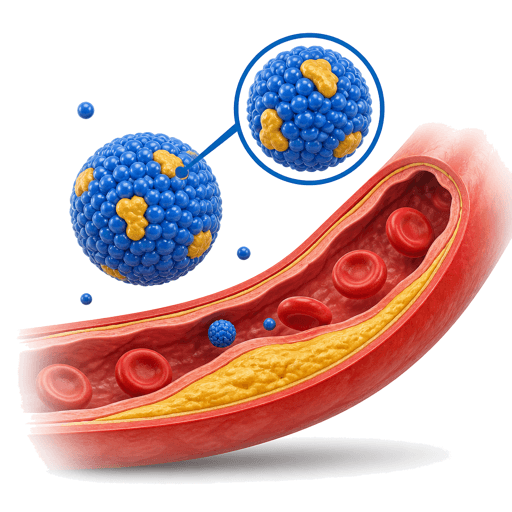
LDL Cholesterol Calculator (Friedewald)
Estimate LDL cholesterol from total cholesterol, HDL, and fasting triglycerides using the Friedewald formula—with AHA/ACC interpretation, non-HDL, and PDF export.
Calculator Categories
Explore more free tools by health topic. Your calculator's category is highlighted below.
Heart & Metabolic Health
23 calculators
Browse categoryNutrition & Metabolism
31 calculators
Browse categoryBody Composition
16 calculators
Browse categoryFitness & Cardio
13 calculators
Browse categorySleep & Circadian Health
6 calculators
Browse categoryAging & Longevity
6 calculators
Browse categoryMental Wellbeing
4 calculators
Browse categoryWomen's Health
10 calculators
Browse categoryEnvironment & Lifestyle
6 calculators
Browse category