LDL Cholesterol Calculator (Friedewald Formula)
Estimate LDL cholesterol from your fasting lipid panel using the Friedewald formula. Enter total cholesterol, HDL, and triglycerides in mg/dL or mmol/L for AHA/ACC interpretation and exportable results.
Enter your details — results appear below after you calculate.
Lipid panel values
Desirable: < 200 mg/dL (< 5.2 mmol/L)
Protective: ≥ 60 mg/dL; low HDL: < 40 mg/dL (men)
Friedewald valid when TG < 400 mg/dL (< 4.5 mmol/L) after 9–12 h fast
“For me” saves to My Metrics when you’re signed in. “For other” only shows results.
How this LDL cholesterol calculator (Friedewald) works
This tool estimates LDL cholesterol using the Friedewald formula—the global standard since 1972: LDL = Total cholesterol − HDL − (Triglycerides ÷ 5) in mg/dL, or LDL = TC − HDL − (TG ÷ 2.2) in mmol/L. LDL is the primary AHA/ACC target for cardiovascular risk reduction. Categories: < 100 optimal, 100–129 near optimal, 130–189 high, ≥ 190 very high mg/dL.
Enter total cholesterol, HDL, and fasting triglycerides in mg/dL or mmol/L exactly as shown on your lipid panel. A 9–12 hour fast (water only) is required—non-fasting triglycerides invalidate Friedewald accuracy. Friedewald applies only when triglycerides < 400 mg/dL (< 4.5 mmol/L). Select gender for HDL reference ranges.
Results include estimated LDL, VLDL estimate (TG ÷ 5), non-HDL cholesterol (Total − HDL), LDL:HDL ratio, AHA/ACC category, familial hypercholesterolemia screening when LDL ≥ 190, individual lipid status for total cholesterol/HDL/triglycerides, health score, risk level, clinical interpretation, lifestyle recommendations, and PDF export.
Pair with our Cholesterol Level Interpreter (full panel + ASCVD risk), Triglyceride/HDL Ratio (metabolic pattern), Metabolic Syndrome Risk, and Cardiovascular Risk calculators. When triglycerides are 150–399 mg/dL, Friedewald may underestimate LDL 5–15%—prefer direct LDL or non-HDL for treatment decisions.
This is an educational estimation tool—not a diagnosis. Never start or stop statins based solely on calculator results. Scroll below for LDL treatment targets by risk group, lipoprotein science, FH screening, typical lipid panel costs, worked examples, and 30+ FAQs.
LDL Cholesterol Calculator (Friedewald Formula) – Estimate LDL from Your Lipid Panel
Millions search "LDL cholesterol calculator", "Friedewald formula", "calculate LDL from total cholesterol HDL triglycerides", and "LDL cholesterol normal range India" each year. When your lab reports total cholesterol, HDL, and triglycerides but not LDL—or you want to verify the calculation—our free Friedewald calculator estimates LDL cholesterol instantly. Enter values in mg/dL or mmol/L, get AHA/ACC category interpretation, non-HDL cholesterol, LDL:HDL ratio, familial hypercholesterolemia screening, and exportable PDF results.
Pair results with our Cholesterol Level Interpreter, Triglyceride/HDL Ratio Calculator, Metabolic Syndrome Risk Calculator, and Cardiovascular Risk Calculator for a complete picture of how your lipids affect heart health and long-term wellness.
Why Estimate LDL with the Friedewald Formula?
LDL cholesterol is the primary target for cardiovascular risk reduction in AHA/ACC guidelines. It drives atherosclerotic plaque formation in artery walls—each LDL particle can infiltrate the endothelium, become oxidized, and trigger inflammatory cascades that narrow coronary, cerebral, and peripheral arteries over decades. While many labs report LDL directly, basic lipid panels—especially in India's ₹300–800 screening packages—often provide only total cholesterol, HDL, and triglycerides. The Friedewald equation (1972) remains the global standard for calculating LDL from these three values when direct measurement is unavailable.
Understanding your estimated LDL helps you interpret doctor recommendations, track lifestyle changes, and prepare informed questions for clinic visits. This calculator also computes non-HDL cholesterol (Total − HDL)—an alternative treatment target when triglycerides are elevated and Friedewald accuracy decreases—and LDL:HDL ratio for plaque balance assessment.
1What You Enter
Laboratory Values (fasting)
- Total cholesterol — mg/dL or mmol/L
- HDL cholesterol — mg/dL or mmol/L
- Triglycerides — mg/dL or mmol/L (must be < 400 mg/dL for Friedewald)
- Unit toggle — same system for all three lipids
Personal Factors
- Gender — male or female (HDL reference ranges differ)
- Fasting status — 9–12 hours, water only
- Pair with glucose, blood pressure, waist for ASCVD risk
Example (High LDL — man, 52)
TC 245 mg/dL, HDL 38 mg/dL, TG 165 mg/dL. LDL = 245 − 38 − 33 = 174 mg/dL — high. Non-HDL 207 mg/dL. LDL:HDL ratio 4.6. At TG 165, Friedewald may underestimate true LDL ~10%. Medical review for statin therapy advised.
Example (Optimal LDL — woman, 35)
TC 175 mg/dL, HDL 62 mg/dL, TG 85 mg/dL. LDL = 175 − 62 − 17 = 96 mg/dL — optimal. Non-HDL 113 mg/dL. LDL:HDL ratio 1.5. Both lipids favorable; continue heart-healthy habits and routine screening.
2How LDL Is Calculated
Friedewald formula
LDL (mg/dL) = Total cholesterol − HDL − (Triglycerides ÷ 5)
LDL (mmol/L) = Total cholesterol − HDL − (Triglycerides ÷ 2.2)
The divisor 5 estimates VLDL cholesterol from triglycerides. VLDL particles carry most blood triglycerides; their cholesterol content approximates TG/5 in mg/dL. Subtracting HDL (protective) and VLDL-C from total cholesterol leaves estimated LDL.
Unit conversions used
- Cholesterol (TC, HDL, LDL) mg/dL = mmol/L × 38.67
- Triglycerides mg/dL = mmol/L × 88.57
Secondary calculations
- Non-HDL = Total cholesterol − HDL
- VLDL estimate = Triglycerides ÷ 5 (mg/dL)
- LDL:HDL ratio — low risk < 3.5, high risk > 5.0
AHA/ACC LDL Cholesterol Classification
| Category | LDL (mg/dL) | LDL (mmol/L) | Risk profile | Typical action |
|---|---|---|---|---|
| Optimal | < 100 | < 2.6 | Low atherosclerotic risk from LDL | Maintain lifestyle; routine screening |
| Near optimal | 100–129 | 2.6–3.3 | Moderate; depends on ASCVD risk | Lifestyle; statin per risk score |
| High | 130–189 | 3.4–4.9 | Elevated plaque formation risk | Medical review; lipid-lowering therapy |
| Very high | ≥ 190 | ≥ 4.9 | FH likely; aggressive CVD risk | Prompt treatment; screen for FH |
LDL Treatment Targets by Risk Category
Classification (above) describes your current LDL level. Treatment targets depend on overall cardiovascular risk—not the classification alone. AHA/ACC 2018 guidelines define LDL goals by clinical scenario.
| Risk group | LDL target | Non-HDL target | Example scenario |
|---|---|---|---|
| Low ASCVD risk | < 130 mg/dL | < 160 mg/dL | Young adult, no risk factors |
| Borderline/moderate risk | < 100 mg/dL | < 130 mg/dL | Elevated risk score, lifestyle first |
| Diabetes (age 40–75) | < 70 mg/dL | < 100 mg/dL | Moderate-intensity statin typically indicated |
| Clinical ASCVD | < 70 mg/dL | < 100 mg/dL | Prior MI, stroke, PAD — high-intensity statin |
| Very high risk ASCVD | < 55 mg/dL | < 85 mg/dL | Recurrent events, FH + ASCVD, multiple risk factors |
| Familial hypercholesterolemia | < 70 mg/dL (or 50% reduction) | < 100 mg/dL | Often requires high-intensity statin + ezetimibe/PCSK9i |
Full Lipid Panel Reference Ranges (AHA/ACC)
Friedewald LDL is one piece of the lipid puzzle. Use your laboratory's printed reference interval when available—the ranges below follow AHA/ACC classification used globally including India.
| Marker | Optimal | Borderline | High | Very high |
|---|---|---|---|---|
| Total cholesterol (mg/dL) | < 200 | 200–239 | 240–279 | ≥ 280 |
| LDL cholesterol (mg/dL) | < 100 | 100–129 | 130–189 | ≥ 190 |
| HDL — men (mg/dL) | ≥ 60 | 40–59 | < 40 | < 30 |
| HDL — women (mg/dL) | ≥ 60 | 50–59 | < 50 | < 35 |
| Triglycerides (mg/dL) | < 150 | 150–199 | 200–499 | ≥ 500 |
LDL vs Non-HDL vs ApoB — Which Marker Matters?
Multiple lipid metrics predict cardiovascular events. Each captures different aspects of atherogenic particle burden. Using them together provides the fullest risk picture—especially when triglycerides are elevated and Friedewald LDL may underestimate true risk.
| Marker | Formula / source | Best for | Limitation |
|---|---|---|---|
| LDL-C (Friedewald) | TC − HDL − TG/5 | Primary treatment target; screening | Inaccurate when TG ≥ 150–400 mg/dL |
| Non-HDL-C | Total − HDL | Elevated TG; alternative treatment target | Does not distinguish particle size |
| LDL:HDL ratio | LDL ÷ HDL | Plaque balance; risk stratification | Depends on Friedewald accuracy |
| ApoB | Lab assay (₹800–2000) | Particle count; residual risk on statins | Not universally available |
| Lipoprotein(a) | Lab assay (₹1000–2500) | Genetic risk; family history of early MI | Genetically determined; limited treatment options |
Understanding Lipoprotein Particles
Blood cholesterol travels in lipoprotein particles—not as free cholesterol. Friedewald estimates LDL-C by subtracting HDL and VLDL components from total cholesterol. Understanding each particle type clarifies why all three inputs matter.
LDL
Low-density lipoprotein ("bad" cholesterol) delivers cholesterol to tissues. Excess LDL infiltrates artery walls, oxidizes, and forms atherosclerotic plaque—the primary driver of heart attack and stroke. Lower LDL = lower event risk in trials of statins, ezetimibe, and PCSK9 inhibitors.
- Primary AHA/ACC treatment target
- Small dense LDL more atherogenic (common in insulin resistance)
- Statins reduce LDL 30–55% depending on intensity
VLDL
Very-low-density lipoprotein carries triglycerides from the liver. Friedewald estimates VLDL cholesterol as TG/5. When triglycerides rise (insulin resistance, alcohol, refined carbs), VLDL increases and the Friedewald estimate becomes less reliable.
- VLDL-C ≈ Triglycerides ÷ 5 (mg/dL)
- Elevated VLDL raises non-HDL cholesterol
- VLDL remnants contribute to plaque like LDL
HDL
High-density lipoprotein ("good" cholesterol) removes cholesterol from arteries via reverse cholesterol transport. Higher HDL is generally protective. Low HDL increases residual risk even when LDL is at target—a hallmark of South Asian dyslipidemia.
- Subtracted from total in Friedewald formula
- Exercise and smoking cessation raise HDL
- Low HDL: < 40 men / < 50 women mg/dL
Friedewald Accuracy & Limitations
When Friedewald works well
- Fasting triglycerides < 150 mg/dL (optimal accuracy)
- Standard fasting lipid panel (9–12 hours)
- Adults without chylomicronemia or type III hyperlipidemia
- Screening, education, and verifying lab calculations
- Tracking LDL trends when TG remains stable
When Friedewald fails
- Triglycerides ≥ 400 mg/dL — use direct LDL
- TG 150–399 — may underestimate LDL 5–15%
- Non-fasting samples — TG elevated, LDL underestimated
- Pregnancy, chylomicronemia, acute illness
- Post-binge alcohol or very high-carb meal before draw
The Martin-Hopkins equation (2013) uses a variable TG:VLDL ratio and improves accuracy when TG is 150–400 mg/dL. Many US labs now use Martin-Hopkins; Indian labs predominantly still use classic Friedewald. When TG is borderline elevated, prefer direct LDL or non-HDL for treatment decisions.
Familial Hypercholesterolemia (FH) — When LDL ≥ 190 mg/dL
LDL ≥ 190 mg/dL on repeated fasting measurements strongly suggests familial hypercholesterolemia—a genetic disorder affecting ~1 in 250 people worldwide and possibly more in certain South Asian founder populations. Untreated FH causes premature coronary artery disease, sometimes before age 40.
FH warning signs
- LDL ≥ 190 mg/dL (or ≥ 160 in children)
- Family history of early heart attack (men < 55, women < 65)
- Tendon xanthomas (Achilles, knuckles, elbows)
- Arcus cornealis (cholesterol ring in eye) before age 45
- LDL > 250 mg/dL at any age
- Parent or sibling with known FH diagnosis
FH management overview
- High-intensity statin as first-line (atorvastatin 40–80 mg, rosuvastatin 20–40 mg)
- Add ezetimibe if LDL remains above target
- PCSK9 inhibitors (evolocumab, alirocumab) for refractory cases
- Genetic testing and cascade screening of family members
- Lifestyle alone is insufficient—pharmacotherapy is essential
- Children with FH may need statins from age 8–10 per guidelines
High vs Optimal LDL: Clinical Patterns
High LDL (≥ 130 mg/dL) — common causes
- Familial hypercholesterolemia (genetic)
- High saturated fat and trans fat diet
- Hypothyroidism (check TSH if LDL unexpectedly high)
- Nephrotic syndrome, chronic kidney disease
- Obesity and metabolic syndrome
- Excess dietary cholesterol and refined carbs
- Sedentary lifestyle
- Some medications (progestins, anabolic steroids)
Optimal LDL (< 100 mg/dL) — typical profile
- Mediterranean or plant-forward diet low in saturated fat
- Regular aerobic exercise 150+ min/week
- Healthy body weight and waist circumference
- Non-smoker with moderate alcohol or none
- Normal thyroid function and kidney function
- No strong family history of premature heart disease
- Effective statin therapy when indicated
Medications & Conditions That Affect LDL
Many drugs and medical conditions shift LDL independently of diet. Always review medications and comorbidities before attributing abnormal LDL to lifestyle alone.
Raises LDL cholesterol
- Progestins, anabolic steroids, cyclosporine
- Thiazide diuretics (modest effect)
- Retinoids (isotretinoin at high doses)
- Hypothyroidism — treat TSH first
- Nephrotic syndrome, cholestatic liver disease
- Pregnancy (physiologic rise — do not treat)
Lowers LDL cholesterol (therapy)
- Statins — first-line; LDL reduction 30–55%
- Ezetimibe — blocks intestinal absorption; adds 15–20%
- PCSK9 inhibitors — injectable; LDL reduction 50–60%
- Bile acid sequestrants (cholestyramine) — 15–25%
- Bempedoic acid — oral alternative when statin-intolerant
- High-dose omega-3 does not lower LDL significantly
Lowers LDL (lifestyle)
- Soluble fiber (oats, psyllium) — 5–10% LDL reduction
- Plant sterols/stanols 2 g/day — 6–15% reduction
- Weight loss 5–10% — meaningful LDL drop
- Replacing saturated fat with unsaturated fat
- Portfolio diet (nuts, soy, viscous fiber combined)
Medical conditions to evaluate
- Hypothyroidism — TSH screening if LDL unexpectedly elevated
- Diabetes — tighter LDL targets (< 70 mg/dL)
- Chronic kidney disease — affects lipoprotein metabolism
- Non-alcoholic fatty liver disease (NAFLD)
- Cushing syndrome — central obesity, high LDL/TG
- Obstructive sleep apnea — worsens dyslipidemia
Lifestyle Strategies to Lower LDL — Indian Context
Evidence shows dietary changes, weight loss, and regular exercise can lower LDL 10–25% within 8–12 weeks—often enough to shift borderline patients from statin consideration to lifestyle-only management, or enhance statin efficacy.
Diet — lower LDL naturally
- Replace ghee/butter with mustard, olive, or rice bran oil
- Limit red meat, organ meats, full-fat dairy, and fried snacks
- Increase dal, chana, rajma, and vegetable portions daily
- Add oats (daliya), barley, and psyllium husk (isabgol)
- Eat almonds, walnuts, and flaxseed (alsi) — 30 g/day
- Choose whole grains over maida, white rice, and refined flour
- Plant sterol-fortified foods if available (2 g/day target)
- Eliminate vanaspati and packaged foods with trans fats
Activity, weight & habits
- 150–300 min/week moderate aerobic activity (brisk walk, cycling)
- Resistance training 2×/week — improves lipid profile
- Target 5–10% body weight loss if BMI ≥ 23 (Asian cutoff)
- Quit smoking — improves HDL and endothelial function
- Limit alcohol — raises TG and contributes to visceral fat
- Manage stress and sleep — cortisol affects lipid metabolism
- Recheck fasting lipids 8–12 weeks after sustained changes
Worked Examples: Friedewald in Practice
Example 1 — Optimal LDL (healthy adult)
TC 185 mg/dL, HDL 55 mg/dL, TG 100 mg/dL. LDL = 185 − 55 − (100 ÷ 5) = 185 − 55 − 20 = 110 mg/dL — near optimal. VLDL estimate 20 mg/dL. Non-HDL = 130 mg/dL. LDL:HDL ratio 2.0. Lifestyle maintenance; recheck in 4–6 years if no risk factors.
Example 2 — High LDL with borderline TG
TC 260 mg/dL, HDL 42 mg/dL, TG 180 mg/dL. LDL = 260 − 42 − 36 = 182 mg/dL — high. At TG 180, Friedewald may underestimate true LDL by ~10%. Non-HDL = 218 mg/dL. LDL:HDL ratio 4.3. Medical review for statin therapy; address diet and exercise.
Example 3 — Very high LDL (possible FH)
TC 320 mg/dL, HDL 48 mg/dL, TG 110 mg/dL. LDL = 320 − 48 − 22 = 250 mg/dL — very high. With TG < 150, Friedewald is reliable here. LDL:HDL ratio 5.2. Strongly consider familial hypercholesterolemia screening—especially with family history of early heart disease.
Example 4 — South Asian pattern (normal LDL, high TG)
TC 210 mg/dL, HDL 36 mg/dL, TG 220 mg/dL. LDL = 210 − 36 − 44 = 130 mg/dL — borderline high. But TG 220 means Friedewald likely underestimates true LDL. Non-HDL = 174 mg/dL (more reliable target). Pair with TG/HDL ratio (6.1 — very high) for hidden metabolic risk despite "acceptable" LDL.
Example 5 — SI units (mmol/L)
TC 5.4 mmol/L, HDL 1.2 mmol/L, TG 1.5 mmol/L. LDL ≈ 5.4 − 1.2 − (1.5 ÷ 2.2) = 3.02 mmol/L (~117 mg/dL). This calculator performs unit conversion automatically when you select mmol/L.
Example 6 — Statin response tracking
Before statin: TC 248, HDL 44, TG 140 → LDL = 248 − 44 − 28 = 176 mg/dL. After 12 weeks atorvastatin 20 mg: TC 178, HDL 46, TG 120 → LDL = 178 − 46 − 24 = 108 mg/dL — 39% reduction, near optimal. Recheck every 6–12 months on therapy.
LDL & the South Asian Lipid Pattern
South Asians frequently show LDL in the 100–140 mg/dL range—apparently acceptable by classification—but paired with high triglycerides, low HDL, and elevated TG/HDL ratio. Friedewald may underestimate LDL when TG exceeds 150 mg/dL, masking true atherogenic burden. Non-HDL cholesterol and ApoB testing are especially valuable in this population. Waist circumference plus full lipid panel is more informative than LDL alone.
Lipid Screening in India — When to Test
ICMR and Cardiological Society of India (CSI) align with AHA/ACC lipid targets. Given high dyslipidemia prevalence, earlier and more frequent screening is prudent for South Asians—especially with any metabolic risk factor.
| Population | When to start | Frequency |
|---|---|---|
| Healthy adults, no risk factors | Age 20+ | Every 4–6 years |
| Risk factors (obesity, smoking, family history) | Age 20+ (earlier if strong FH) | Every 1–2 years |
| South Asian adults (general) | Age 20–30 | Every 2–3 years minimum |
| LDL ≥ 130 or on statin therapy | At diagnosis / statin start | 6–12 weeks, then every 6–12 months |
| Diabetes, hypertension, or ASCVD | At diagnosis | Every 6–12 months |
Cost at Indian labs: basic lipid panel ₹300–800; direct LDL add-on ₹200–500; ApoB/Lp(a) ₹1000–2500. Government schemes (NPCDCS) offer free screening in many districts. Corporate health camps frequently report calculated LDL—verify with this tool.
When to See a Doctor — Warning Signs
Seek urgent care if you have
- Chest pain, pressure, or shortness of breath
- Sudden weakness, speech difficulty (stroke signs)
- Leg pain with walking that resolves with rest (claudication)
- Triglycerides ≥ 500 mg/dL with severe abdominal pain
Schedule medical review if
- Estimated LDL ≥ 130 mg/dL on repeat fasting labs
- LDL ≥ 190 mg/dL at any age (FH screening)
- Family history of heart attack or stroke before age 55
- Diabetes, hypertension, or smoking with LDL ≥ 100
- LDL not improving after 3 months of dedicated lifestyle change
- On statin but LDL remains above your treatment target
Limitations of Friedewald LDL Estimation
Despite widespread use for 50+ years, Friedewald has important limitations. Understanding when it misleads prevents overconfidence in a single calculated number.
- TG-dependent accuracy — underestimates LDL when triglycerides are elevated; overestimates when TG is very low.
- Not direct measurement — labs with direct LDL assays provide more accurate results, especially at TG > 150 mg/dL.
- Fasting required — non-fasting TG inflates VLDL estimate and lowers calculated LDL incorrectly.
- Does not measure particle size — small dense LDL (pattern B) is more atherogenic but invisible to Friedewald.
- Ignores Lp(a) — genetically elevated lipoprotein(a) adds risk independent of calculated LDL.
- Acute illness — infections, surgery, and pregnancy temporarily alter lipids; defer interpretation until recovery.
- Single time point — one LDL snapshot is less valuable than trends after lifestyle or statin intervention.
The Science Behind LDL and Atherosclerosis
LDL particles cross the arterial endothelium into the subintimal space where they become oxidized and trigger macrophage recruitment. Foam cells form, fatty streaks develop, and fibrous caps create atherosclerotic plaque over decades. Rupture of vulnerable plaque causes most heart attacks and many strokes.
Randomized trials of statins, ezetimibe, and PCSK9 inhibitors demonstrate that lowering LDL reduces cardiovascular events proportionally—the lower the LDL, the lower the risk (with diminishing returns below 40 mg/dL). The Friedewald formula was developed to estimate this critical number from routinely available lipid panel components, enabling global LDL screening without expensive ultracentrifugation.
Who benefits most from LDL estimation
- Anyone with lipid panel but no reported LDL value
- Patients verifying lab-calculated LDL accuracy
- Health-conscious adults tracking lifestyle response
- Students and clinicians learning Friedewald mechanics
- South Asians assessing full lipid picture with TG/HDL
Recommended follow-up tests
- Direct LDL-C if TG ≥ 150 mg/dL (₹200–500 add-on)
- ApoB — particle count (₹800–2000)
- Lipoprotein(a) — if family history of early MI
- Fasting glucose, HbA1c — diabetes screening
- TSH — if LDL unexpectedly elevated
- Coronary artery calcium score — selected high-risk adults
Common Mistakes When Estimating LDL
1. Using non-fasting triglycerides
Post-meal triglycerides rise 20–30%, underestimating calculated LDL. Always use fasting values (9–12 hours, water only).
2. Applying Friedewald when TG ≥ 400 mg/dL
At very high triglycerides, VLDL-C no longer equals TG/5. Request direct LDL measurement instead.
3. Ignoring non-HDL when TG is elevated
When Friedewald underestimates LDL, non-HDL (Total − HDL) is a more reliable treatment target per AHA/ACC guidelines.
4. Starting statins based on calculator alone
Statin decisions require ASCVD risk scoring, clinical history, and physician guidance—never self-prescribe based on estimated LDL.
5. Treating calculated LDL same as direct LDL at high TG
At TG 150–399 mg/dL, true LDL may be 10–30 mg/dL higher than Friedewald estimate. Do not assume borderline LDL is safe without checking non-HDL or requesting direct assay.
6. Expecting overnight LDL improvement
Meaningful LDL reduction from diet typically takes 8–12 weeks. Statins show effect in 4–6 weeks. Recheck too early and you may underestimate progress.
Frequently Asked Questions (FAQs)
Related Calculators
You might also be interested in these related health and wellness calculators:
Heart Age Calculator
Calculate your heart's biological age based on cardiovascular risk factors like blood pressure, cholesterol, smoking, and lifestyle habits. Get personalized tips to improve your heart health and reduce cardiovascular disease risk.
Metabolic Syndrome Risk Calculator
Screen metabolic syndrome with all 5 harmonized criteria—waist, triglycerides, HDL, blood pressure and fasting glucose. Asian waist cutoffs, diet tips, exercise guidance and lab recommendations.
Cardiovascular Risk Calculator
Estimate heart disease and stroke screening risk from blood pressure, cholesterol, smoking, diabetes, family history, and activity. Educational score with risk domains—not formal ASCVD.
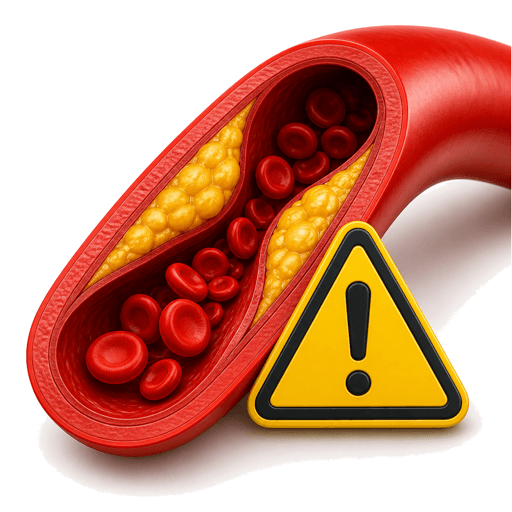
Cholesterol Level Interpreter & Heart Risk Calculator
Interpret cholesterol with AHA/ACC lipid thresholds, color-coded marker cards, LDL:HDL and Total:HDL ratios, cardiovascular risk classification, and personalized diet & exercise recommendations.
Triglyceride/HDL Ratio Calculator
Calculate triglyceride/HDL ratio from fasting lipids for cardiometabolic risk, insulin resistance screening, AHA lipid interpretation, and PDF export.
Non-HDL Cholesterol Calculator
Calculate non-HDL cholesterol from total cholesterol and HDL—with AHA/ACC interpretation, TC:HDL ratio, treatment targets, and PDF export. Valid at any triglyceride level.
Atherogenic Index of Plasma (AIP) Calculator
Calculate AIP (log₁₀ TG/HDL in mmol/L) from fasting lipids for log-based atherogenic risk, Dobiášová classification, insulin resistance screening, and PDF export.
ApoB Heart Risk Calculator
Interpret ApoB (apolipoprotein B) for atherogenic particle risk in mg/dL or g/L—with ESC/EAS treatment targets, LDL discordance check, and PDF export.
Calculator Categories
Explore more free tools by health topic. Your calculator's category is highlighted below.
Heart & Metabolic Health
23 calculators
Browse categoryNutrition & Metabolism
31 calculators
Browse categoryBody Composition
16 calculators
Browse categoryFitness & Cardio
13 calculators
Browse categorySleep & Circadian Health
6 calculators
Browse categoryAging & Longevity
6 calculators
Browse categoryMental Wellbeing
4 calculators
Browse categoryWomen's Health
10 calculators
Browse categoryEnvironment & Lifestyle
6 calculators
Browse category