Non-HDL Cholesterol Calculator
Calculate non-HDL cholesterol from total cholesterol and HDL in mg/dL or mmol/L. Get AHA/ACC risk interpretation, TC:HDL ratio, treatment targets, and exportable results—valid at any triglyceride level.
Enter your details — results appear below after you calculate.
Lipid panel values
Desirable: < 200 mg/dL (< 5.2 mmol/L)
Protective: ≥ 60 mg/dL; low HDL: < 40 mg/dL (men)
“For me” saves to My Metrics when you’re signed in. “For other” only shows results.
How this non-HDL cholesterol calculator works
This tool calculates non-HDL cholesterol—all atherogenic lipoprotein cholesterol in one number: Non-HDL = Total cholesterol − HDL. It captures LDL, VLDL, IDL, and Lp(a) particles. AHA/ACC categories: < 130 optimal, 130–159 borderline, 160–189 high, ≥ 190 very high mg/dL.
Enter total cholesterol and HDL in mg/dL or mmol/L exactly as shown on your lipid panel. Unlike Friedewald LDL, fasting is not required—non-HDL remains accurate at any triglyceride level. Select gender for HDL reference ranges.
Results include non-HDL cholesterol, TC:HDL ratio, non-HDL:HDL ratio, AHA/ACC category, treatment targets by risk group, individual lipid status for total cholesterol and HDL, health score, risk level, clinical interpretation, lifestyle recommendations, and PDF export.
Pair with our LDL Cholesterol Calculator (Friedewald) when triglycerides are low, Triglyceride/HDL Ratio for metabolic pattern, Cholesterol Level Interpreter for full panel, and Cardiovascular Risk calculators. Non-HDL is especially valuable when triglycerides are elevated and Friedewald LDL may underestimate risk.
This is an educational tool—not a diagnosis. Never start or stop statins based solely on calculator results. Scroll below for treatment targets, non-HDL vs LDL comparison, worked examples, typical lipid panel costs, and 20+ FAQs.
Non-HDL Cholesterol Calculator – Atherogenic Lipoprotein Assessment
Millions search "non-HDL cholesterol calculator", "non-HDL normal range", "total cholesterol minus HDL", and "non-HDL vs LDL India" each year. Non-HDL cholesterol captures all atherogenic lipoproteins—LDL, VLDL, IDL, and Lp(a)—in one simple number: Total cholesterol minus HDL. Our free calculator accepts values in mg/dL or mmol/L, returns AHA/ACC category interpretation, TC:HDL ratio, treatment targets, clinical recommendations, and exportable PDF results.
Pair results with our LDL Cholesterol Calculator (Friedewald), Cholesterol Level Interpreter, Triglyceride/HDL Ratio Calculator, and Cardiovascular Risk Calculator for a complete picture of how your lipids affect heart health.
Why Calculate Non-HDL Cholesterol?
LDL cholesterol is the primary treatment target in AHA/ACC guidelines—but when triglycerides are elevated (common in metabolic syndrome, diabetes, and the South Asian lipid pattern), Friedewald LDL may underestimate true atherogenic risk by 5–15%. Non-HDL cholesterol solves this problem: it requires only total cholesterol and HDL, does not need fasting, and remains accurate at any triglyceride level.
Clinical trials show non-HDL predicts cardiovascular events as strongly as LDL—and sometimes better when triglycerides are high. AHA/ACC 2018 guidelines endorse non-HDL as a co-primary or alternative treatment target, with goals typically 30 mg/dL above the corresponding LDL target.
1What You Enter
Laboratory Values
- Total cholesterol — mg/dL or mmol/L
- HDL cholesterol — mg/dL or mmol/L
- Unit toggle — same system for both values
- No fasting required for non-HDL calculation
Personal Factors
- Gender — male or female (HDL reference ranges differ)
- Pair with blood pressure, glucose, waist for ASCVD risk
Example (High non-HDL — man, 48)
TC 245 mg/dL, HDL 38 mg/dL. Non-HDL = 245 − 38 = 207 mg/dL — high. TC:HDL ratio 6.4. Medical review for statin therapy advised; target non-HDL often < 130 mg/dL.
Example (Optimal non-HDL — woman, 32)
TC 175 mg/dL, HDL 62 mg/dL. Non-HDL = 175 − 62 = 113 mg/dL — optimal. TC:HDL ratio 2.8. Both lipids favorable; continue heart-healthy habits and routine screening.
2How Non-HDL Is Calculated
Non-HDL formula
Non-HDL (mg/dL) = Total cholesterol − HDL cholesterol
Non-HDL represents all cholesterol carried by apoB-containing lipoproteins: LDL, VLDL, IDL, and lipoprotein(a). HDL is subtracted because it is protective (reverse cholesterol transport). The remainder is all atherogenic cholesterol.
Secondary calculations
- TC:HDL ratio — low risk < 4.0, high risk > 5.0
- Non-HDL:HDL ratio (atherogenic index)
- Unit conversion: cholesterol mg/dL = mmol/L × 38.67
AHA/ACC Non-HDL Cholesterol Classification
| Category | Non-HDL (mg/dL) | Non-HDL (mmol/L) | Risk profile | Typical action |
|---|---|---|---|---|
| Optimal | < 130 | < 3.4 | Low atherogenic burden | Maintain lifestyle; routine screening |
| Borderline high | 130–159 | 3.4–4.1 | Moderate; depends on ASCVD risk | Lifestyle; statin per risk score |
| High | 160–189 | 4.1–4.9 | Elevated plaque formation risk | Medical review; lipid-lowering therapy |
| Very high | ≥ 190 | ≥ 4.9 | FH likely; aggressive CVD risk | Prompt treatment; screen for FH |
Non-HDL Treatment Targets by Risk Category
Classification describes your current non-HDL level. Treatment targets depend on overall cardiovascular risk. AHA/ACC guidelines define non-HDL goals as typically LDL target + 30 mg/dL.
| Risk group | LDL target | Non-HDL target | Example scenario |
|---|---|---|---|
| Low ASCVD risk | < 130 mg/dL | < 160 mg/dL | Young adult, no risk factors |
| Borderline/moderate risk | < 100 mg/dL | < 130 mg/dL | Elevated risk score |
| Diabetes (age 40–75) | < 70 mg/dL | < 100 mg/dL | Moderate-intensity statin indicated |
| Clinical ASCVD | < 70 mg/dL | < 100 mg/dL | Prior MI, stroke, PAD |
| Very high risk ASCVD | < 55 mg/dL | < 85 mg/dL | Recurrent events, FH + ASCVD |
Non-HDL vs LDL vs ApoB — Which Marker Matters?
| Marker | Formula / source | Best for | Limitation |
|---|---|---|---|
| Non-HDL-C | Total − HDL | Elevated TG; alternative treatment target; no fasting needed | Does not distinguish particle size |
| LDL-C (Friedewald) | TC − HDL − TG/5 | Primary treatment target; screening | Inaccurate when TG ≥ 150–400 mg/dL |
| ApoB | Lab assay (₹800–2000) | Particle count; residual risk on statins | Not universally available |
| TC:HDL ratio | Total ÷ HDL | Plaque balance; risk stratification | Less specific than non-HDL for treatment |
When Non-HDL Outperforms Friedewald LDL
Non-HDL advantages
- No fasting required—uses only TC and HDL
- Accurate at any triglyceride level
- Captures VLDL and remnant cholesterol
- Endorsed as co-primary target in AHA/ACC guidelines
- Widely available on modern lipid panels
- Especially valuable in South Asian dyslipidemia
When LDL is still preferred
- Low triglycerides (< 150 mg/dL)—Friedewald is accurate
- Most clinical trials used LDL as primary endpoint
- Statin dosing often guided by LDL reduction %
- Direct LDL measurement available at many labs
- Familial hypercholesterolemia screening uses LDL ≥ 190
Worked Examples: Non-HDL in Practice
Example 1 — Optimal non-HDL (healthy adult)
TC 185 mg/dL, HDL 55 mg/dL. Non-HDL = 185 − 55 = 130 mg/dL — borderline (at threshold). TC:HDL ratio 3.4. Lifestyle maintenance; recheck in 1–2 years if no risk factors.
Example 2 — South Asian pattern (hidden risk)
TC 210 mg/dL, HDL 36 mg/dL. Non-HDL = 210 − 36 = 174 mg/dL — high. Friedewald LDL might appear borderline (~130) if TG is elevated, but non-HDL reveals true atherogenic burden. Pair with TG/HDL ratio for metabolic assessment.
Example 3 — SI units (mmol/L)
TC 5.4 mmol/L, HDL 1.2 mmol/L. Non-HDL = 5.4 − 1.2 = 4.2 mmol/L (~163 mg/dL) — high. This calculator performs unit conversion automatically when you select mmol/L.
Lifestyle Strategies to Lower Non-HDL — Indian Context
Diet
- Replace ghee/butter with mustard, olive, or rice bran oil
- Limit red meat, organ meats, full-fat dairy, fried snacks
- Increase dal, chana, rajma, oats, and psyllium husk
- Eat almonds, walnuts, flaxseed — 30 g/day
- Eliminate vanaspati and packaged foods with trans fats
Activity & habits
- 150–300 min/week moderate aerobic activity
- Resistance training 2×/week — improves lipid profile
- Target 5–10% body weight loss if BMI ≥ 23
- Quit smoking — raises HDL and lowers non-HDL indirectly
- Recheck lipids 8–12 weeks after sustained changes
Frequently Asked Questions (FAQs)
Related Calculators
You might also be interested in these related health and wellness calculators:

Heart Age Calculator
Calculate your heart's biological age based on cardiovascular risk factors like blood pressure, cholesterol, smoking, and lifestyle habits. Get personalized tips to improve your heart health and reduce cardiovascular disease risk.
Metabolic Syndrome Risk Calculator
Screen metabolic syndrome with all 5 harmonized criteria—waist, triglycerides, HDL, blood pressure and fasting glucose. Asian waist cutoffs, diet tips, exercise guidance and lab recommendations.
Cardiovascular Risk Calculator
Estimate heart disease and stroke screening risk from blood pressure, cholesterol, smoking, diabetes, family history, and activity. Educational score with risk domains—not formal ASCVD.
Cholesterol Level Interpreter & Heart Risk Calculator
Interpret cholesterol with AHA/ACC lipid thresholds, color-coded marker cards, LDL:HDL and Total:HDL ratios, cardiovascular risk classification, and personalized diet & exercise recommendations.
Triglyceride/HDL Ratio Calculator
Calculate triglyceride/HDL ratio from fasting lipids for cardiometabolic risk, insulin resistance screening, AHA lipid interpretation, and PDF export.
LDL Cholesterol Calculator (Friedewald)
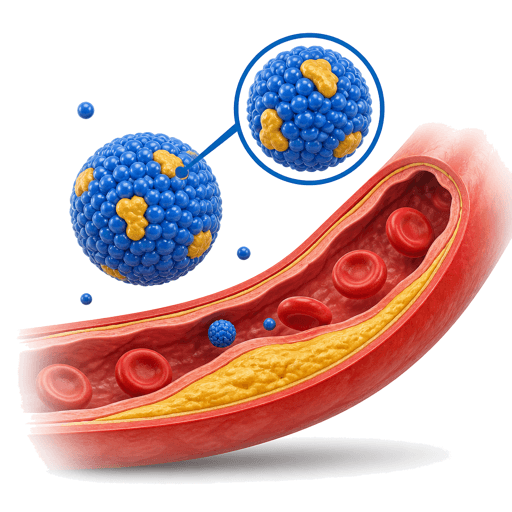
Estimate LDL cholesterol from total cholesterol, HDL, and fasting triglycerides using the Friedewald formula—with AHA/ACC interpretation, non-HDL, and PDF export.
Atherogenic Index of Plasma (AIP) Calculator
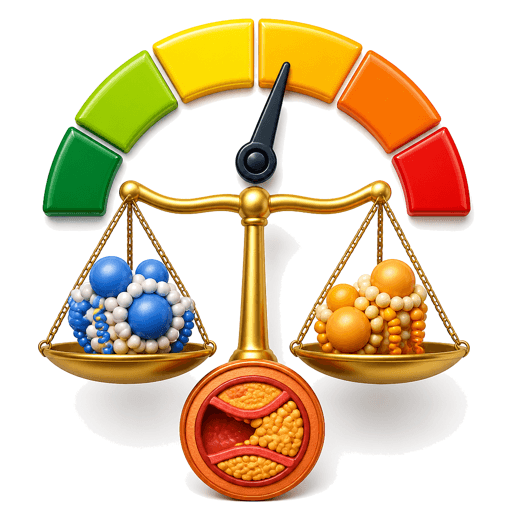
Calculate AIP (log₁₀ TG/HDL in mmol/L) from fasting lipids for log-based atherogenic risk, Dobiášová classification, insulin resistance screening, and PDF export.

ApoB Heart Risk Calculator
Interpret ApoB (apolipoprotein B) for atherogenic particle risk in mg/dL or g/L—with ESC/EAS treatment targets, LDL discordance check, and PDF export.
Calculator Categories
Explore more free tools by health topic. Your calculator's category is highlighted below.
Heart & Metabolic Health
23 calculators
Browse categoryNutrition & Metabolism
31 calculators
Browse categoryBody Composition
16 calculators
Browse categoryFitness & Cardio
13 calculators
Browse categorySleep & Circadian Health
6 calculators
Browse categoryAging & Longevity
6 calculators
Browse categoryMental Wellbeing
4 calculators
Browse categoryWomen's Health
10 calculators
Browse categoryEnvironment & Lifestyle
6 calculators
Browse category